


PRESS & NEWS
Quick Question June 2026 Result:
A total of 564 people responded, offering important insight into how diagnosis can evolve over time and reflecting the complexity many families face on the FTD journey.
In June, we asked the FTD Disorders Registry community: “Has your diagnosis changed since you or the person diagnosed were first diagnosed with FTD?” A total of 564 people responded, offering important insight into how diagnosis can evolve over time and reflecting the complexity many families face on the FTD journey.
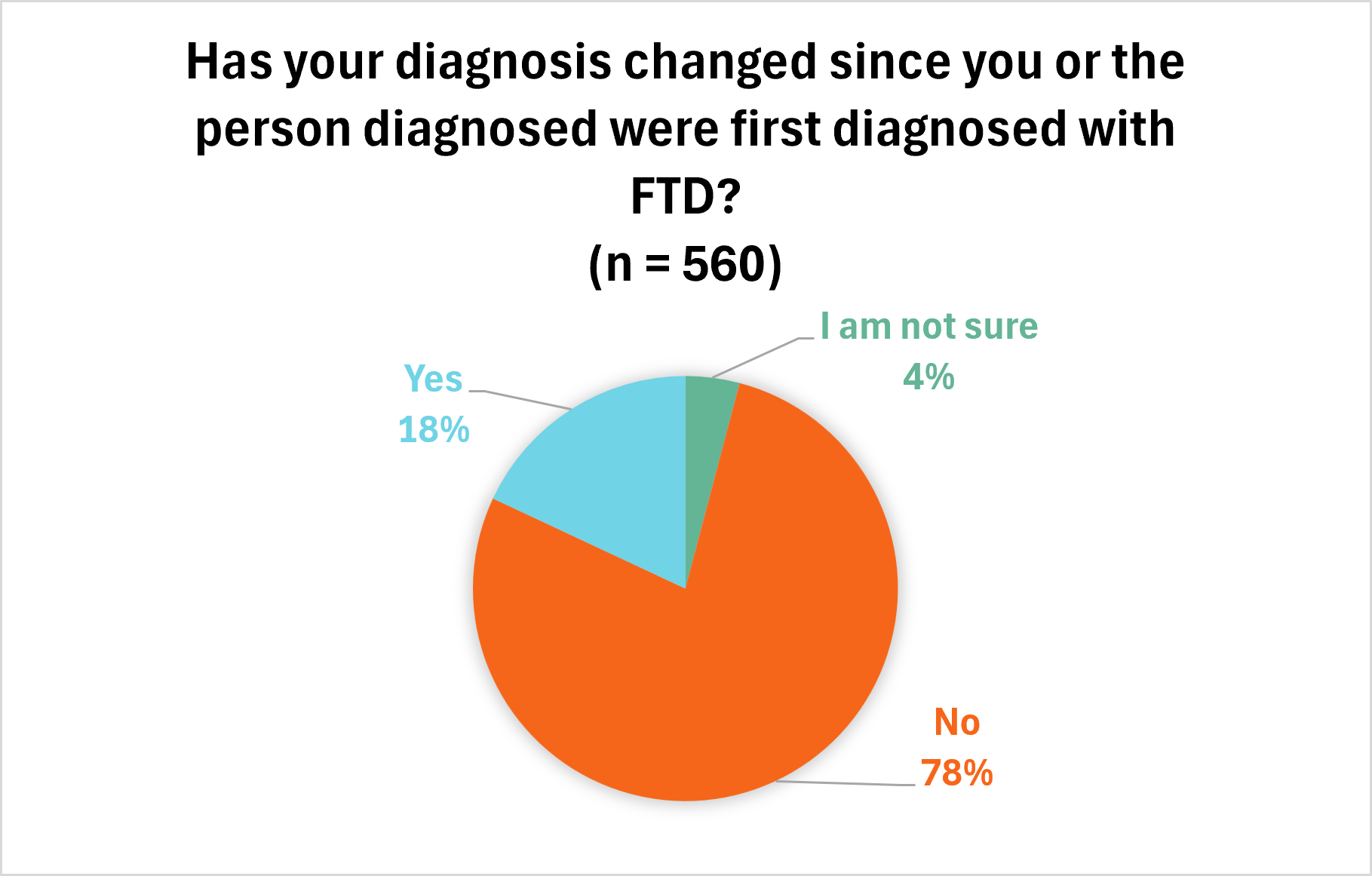
Most respondents reported that their diagnosis had not changed: 78% answered no, while 18% said yes and 4% were not sure. 4 people did not answer. These responses may suggest that although reaching an FTD diagnosis can take time, once FTD is identified, the diagnosis often remains stable. When changes do occur, they may reflect a more specific understanding of the person’s symptoms or a refinement to the correct FTD subtype.
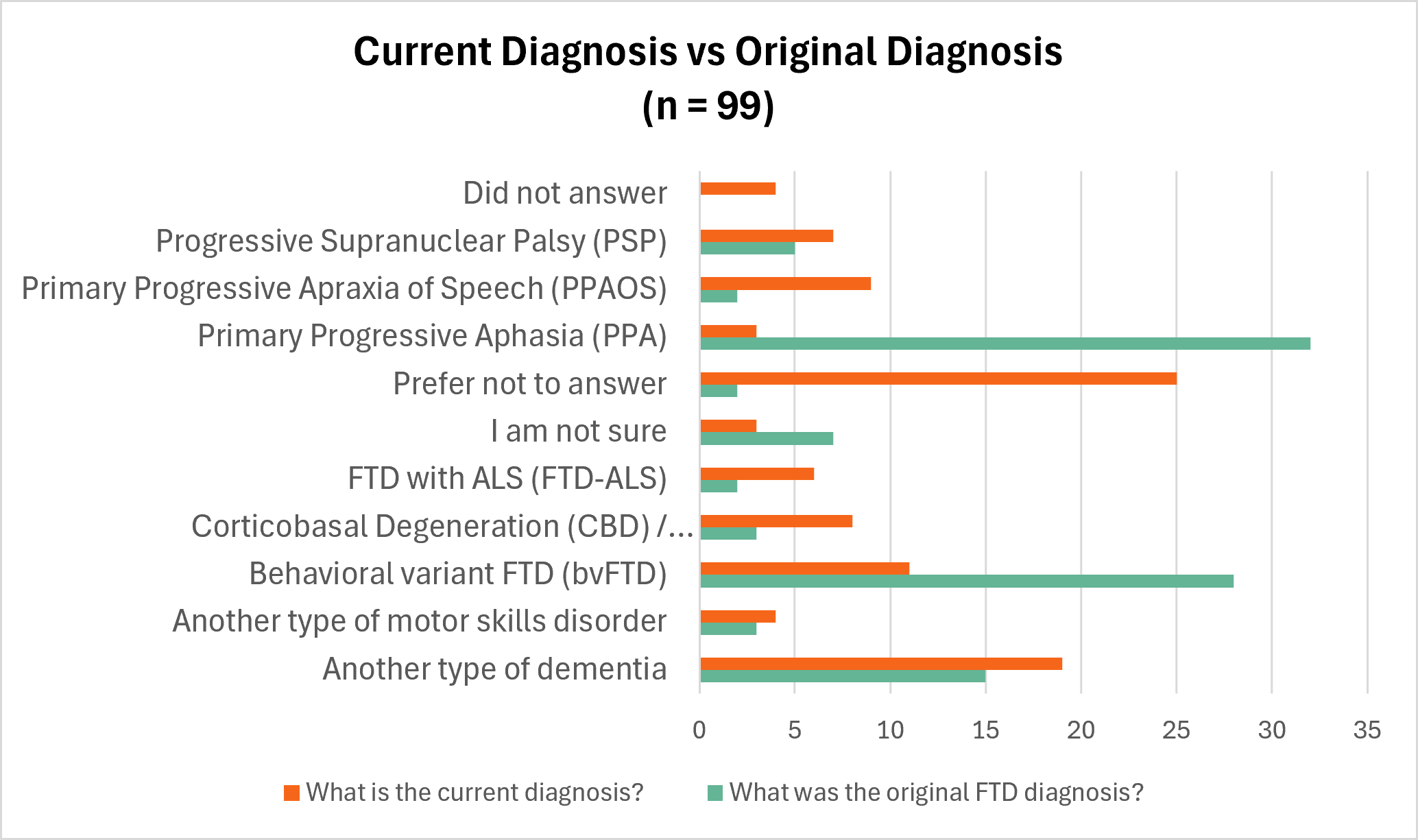
99 respondents reported that their diagnosis did shift over time.
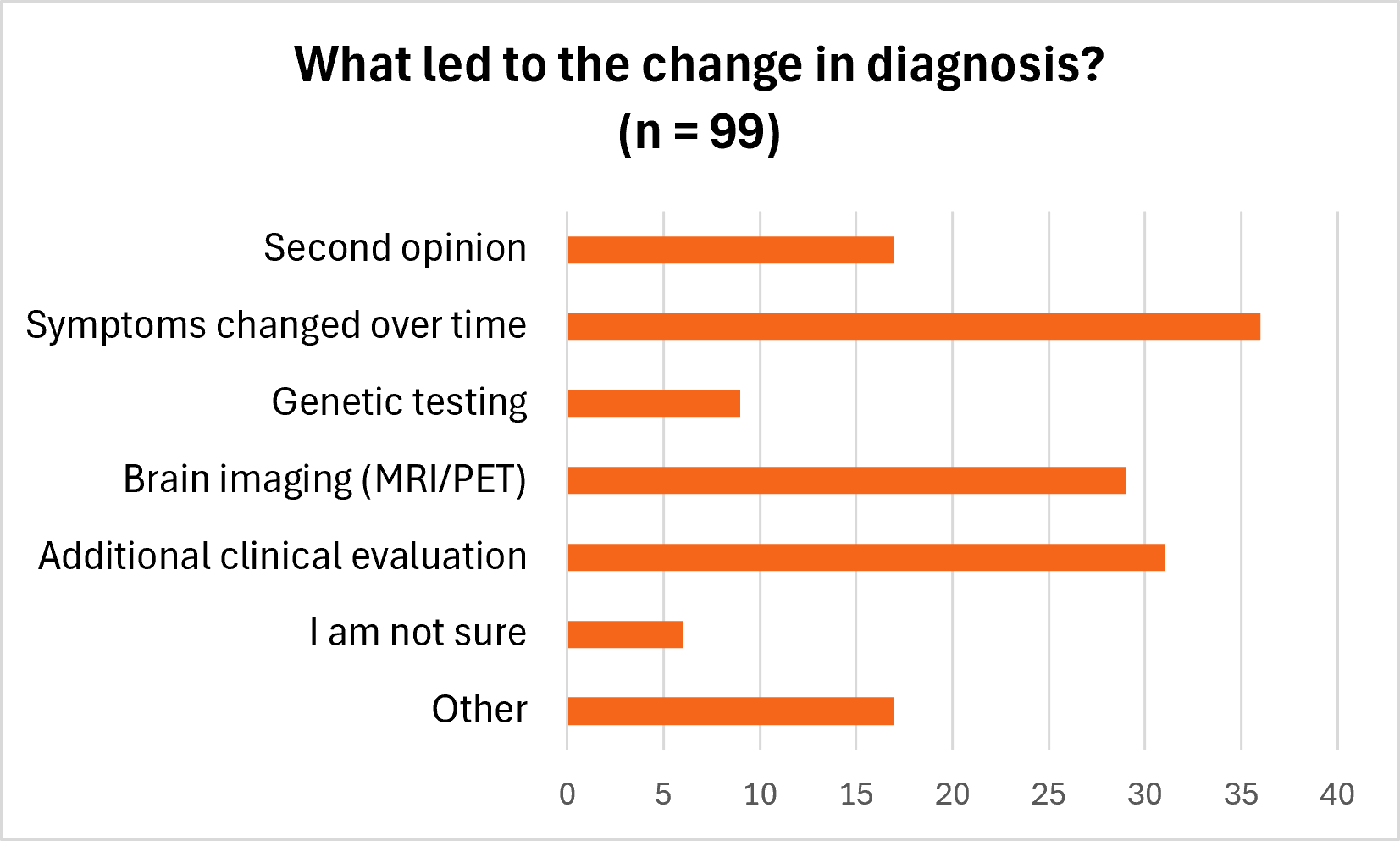
When we asked what led to the change in diagnosis, the most common reason selected was that symptoms changed over time, followed by additional clinical evaluation and brain imaging such as MRI or PET. Among the responses, 25% selected symptoms changed over time, 21% selected additional clinical evaluation, and 20% selected brain imaging. Smaller percentages selected a second opinion or other reason, each at 12%, while 6% selected genetic testing and 4% were not sure. Among those who selected “other,” a significant number (35%) noted that the diagnosis changed after death based on findings from an autopsy report.
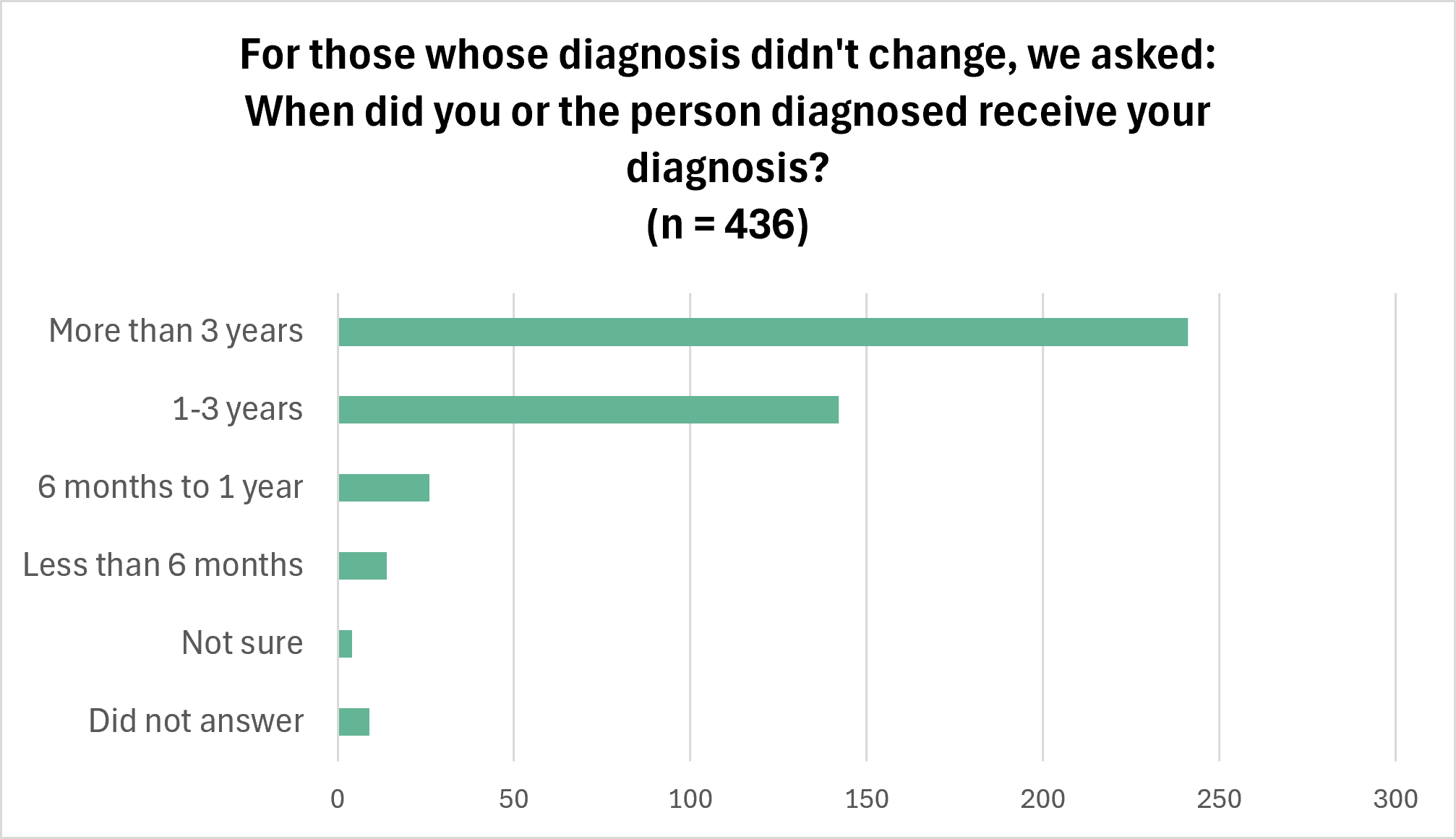
Among respondents whose diagnosis had not changed, most had been living with an FTD diagnosis for more than a year (88%). More than half received their diagnosis more than three years ago (55%), while about one-third received their diagnosis one to three years ago (33%). Smaller percentages reported being diagnosed within the past year: 6% received a diagnosis six months to one year ago, and 3% received a diagnosis less than six months ago. About 1% were not sure when the diagnosis was received, and 2% did not answer.
Together, these responses suggest that while the path to an FTD diagnosis can be long and complex, the FTD diagnosis often remains stable once it is made. For those whose diagnosis did change, the reasons most often reflected the evolving nature of symptoms, additional evaluation, or more detailed clinical information. These findings highlight the importance of continued follow-up, careful observation over time, and access to tools such as imaging, genetic testing, specialist evaluation, and, in some cases, autopsy findings to help families better understand the diagnosis.
Demographics
Among respondents, the largest group was spouses answering on behalf of a person diagnosed with FTD (51%). We also had strong representation from persons diagnosed with FTD answering for themselves (25%) and biological family members answering on behalf of a person diagnosed with FTD (19%). In addition, 2% were individuals carrying a gene associated with FTD with no symptoms, 1% were biological family members answering for themselves, and 1% were caregivers answering on behalf of the person diagnosed with FTD. A small number of respondents identified as other (1%), spouses answering for themselves (less than 1%), caregivers answering for themselves (less than 1%), a friend or a non-biological family member answering on behalf of an FTD diagnosed person (less than 1%).
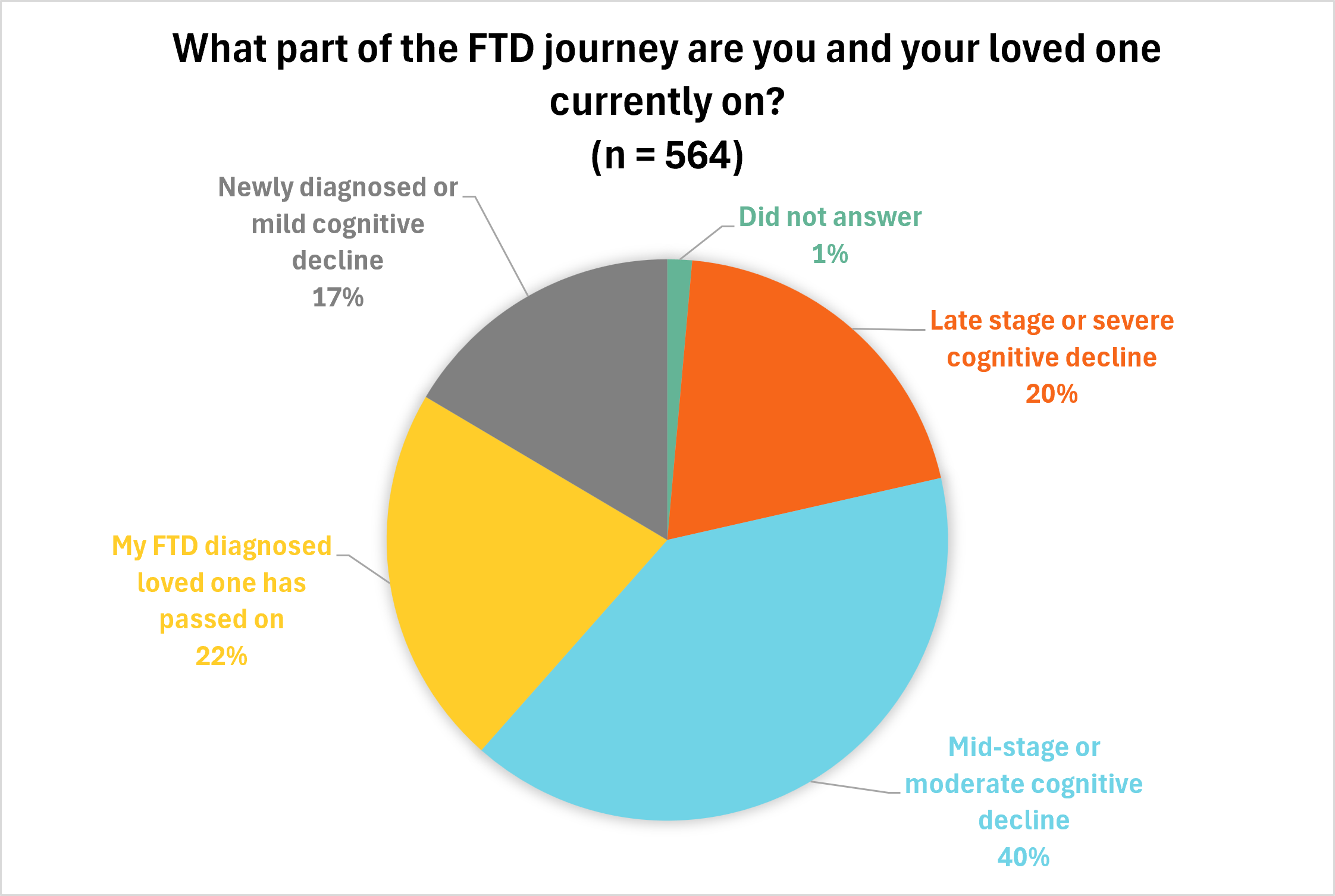
We received input on this Quick Question from all stages of the FTD journey. The largest groups were those in the middle stages of FTD (40%) and those in the late stage of FTD (20%). We also received input from those whose FTD-diagnosed loved one had already passed away (22%), and those newly diagnosed (17%). 8 people did not answer.
The majority of respondents to this Quick Question were female (62%). 36% were male. Ten people did not identify their gender. Answers came from around world with respondents reporting in from 22 countries, including 46 states plus Washington, DC and Puerto Rico, and seven Canadian provinces.
Together we can find a cure for ftd
The FTD Disorders Registry is a powerful tool in the movement to create therapies and find a cure. Together we can help change the course of the disease and put an end to FTD.

Your privacy is important! We promise to protect it. We will not share your contact information.