


PRESS & NEWS
Quick Question September 2026 Result:
Behavioral changes are a common and often challenging aspect of frontotemporal degeneration (FTD), affecting both individuals diagnosed and those who care for them. These changes can take many forms, from shifts in personality and ...
Behavioral changes are a common and often challenging aspect of frontotemporal degeneration (FTD), affecting both individuals diagnosed and those who care for them. These changes can take many forms, from shifts in personality and social behavior to impulsivity, apathy, or difficulty managing emotions. In September's Quick Question, we asked, “Did you or the person diagnosed with FTD experience any challenging behavioral changes?” A total of 652 people responded, helping shed light on the behavioral changes experienced by individuals and families impacted by FTD.
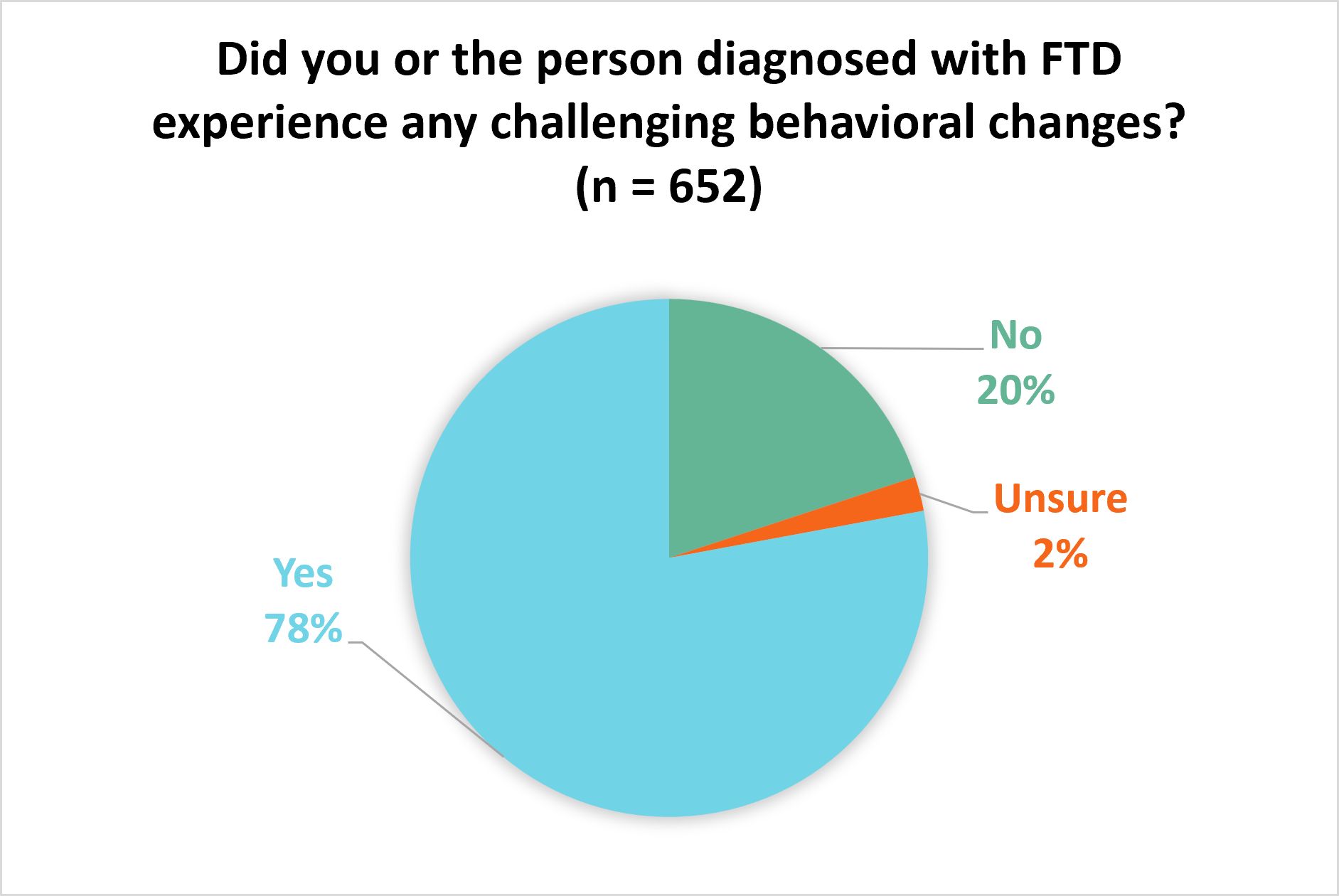
Of the 652 respondents, 78% reported experiencing challenging behavioral changes, either themselves or in the person diagnosed with FTD. Another 20% said they had not experienced these changes, while 2% were unsure. These findings highlight how frequently behavioral changes are part of the FTD experience and underscore the importance of understanding their impact on individuals diagnosed and those who support them.
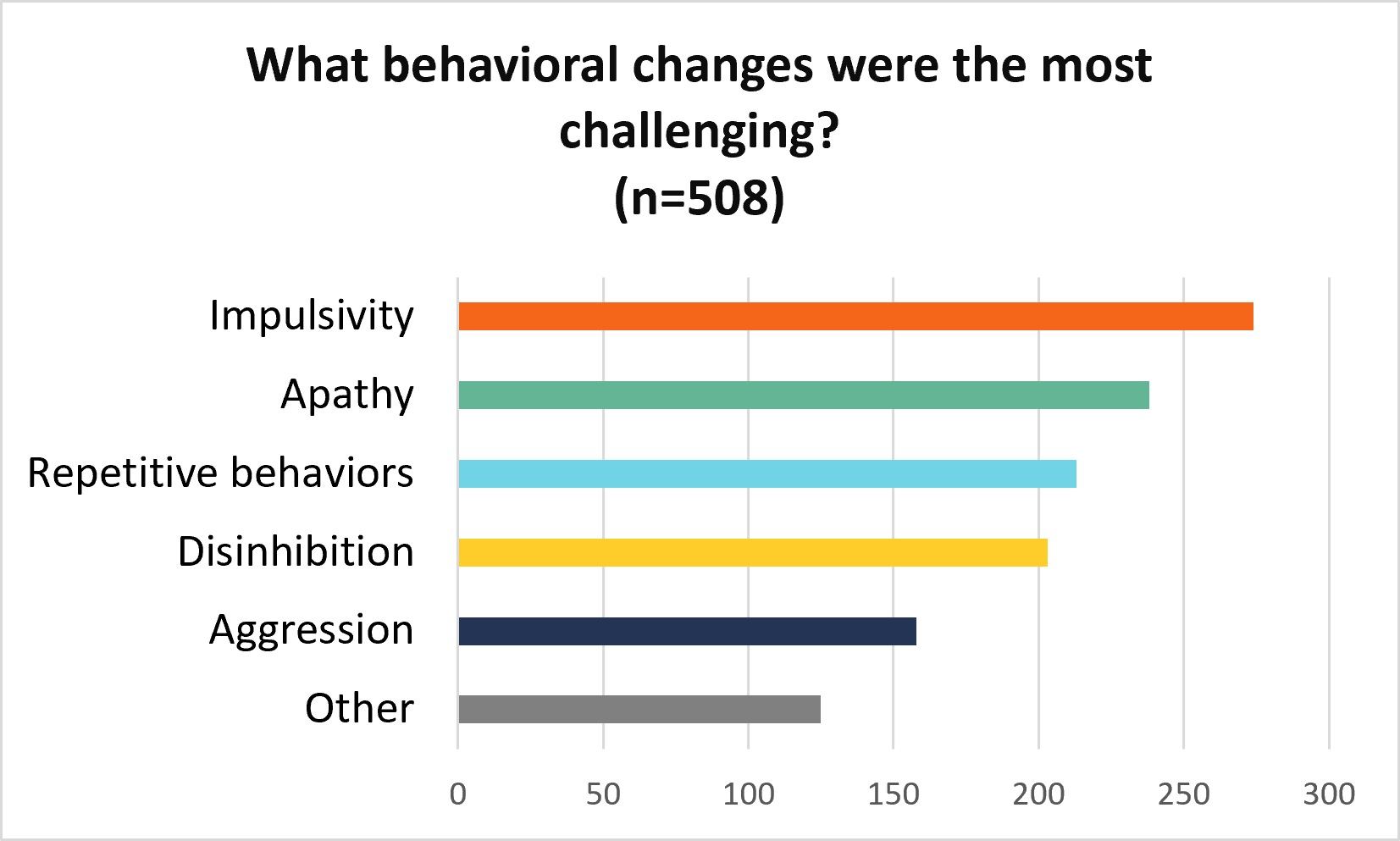
Among the challenging behavioral changes reported, impulsivity was the most common, identified by 42% of all respondents, followed by apathy (37%), repetitive behaviors (33%), disinhibition (31%), and aggression (24%). An additional 19% reported other types of behavioral changes. These responses illustrate the wide range of behavioral symptoms that can occur with FTD and the different ways they may affect individuals and their families.
Respondents who selected “Other” described a wide range of changes, including loss of empathy, anxiety, agitation, irritability, confusion, and poor judgment. Additional responses highlighted changes in eating habits, inappropriate sexual behavior, wandering, communication difficulties, resistance to personal care, and increased vulnerability to financial scams.
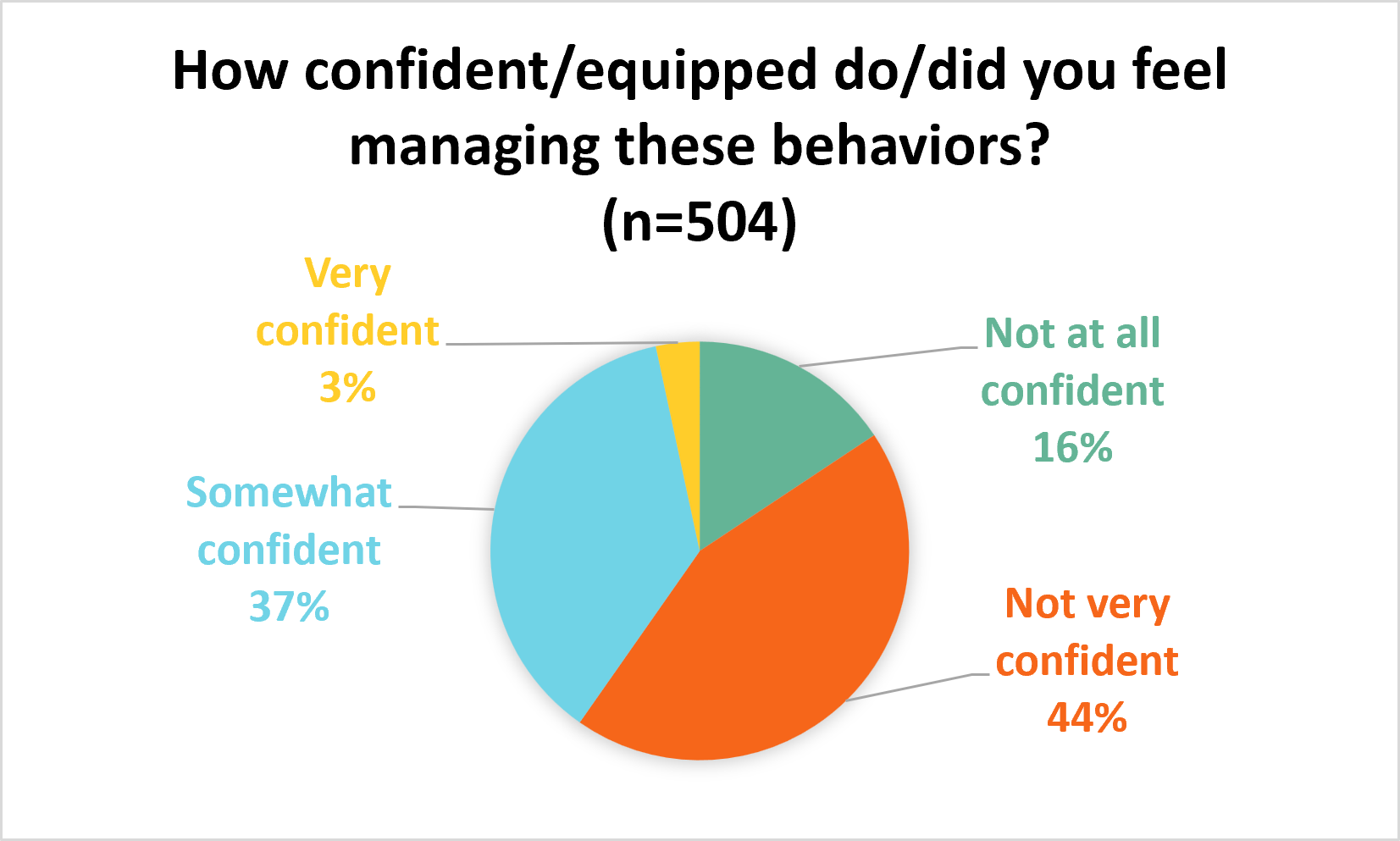
When asked how confident or equipped they felt managing these behavioral changes, 44% of respondents said they were not very confident, while another 16% reported feeling not at all confident. Approximately 37% felt somewhat confident, and just 3% said they were very confident. With 60% reporting little or no confidence, these findings highlight the challenges of managing behavioral changes associated with FTD and the need for greater access to information, resources, and support for those navigating these symptoms.
Demographics
Respondents represented a variety of roles within the FTD community. The largest group was spouses answering on behalf of someone diagnosed with FTD (44.2%), followed by biological family members answering on behalf of someone diagnosed (21.2%) and individuals diagnosed with FTD answering for themselves (18.6%). Another 5.4% were spouses answering for themselves, and 5.4% were biological family members answering for themselves. Smaller groups included caregivers answering on behalf of someone diagnosed (1.8%) or for themselves (0.6%), individuals carrying an FTD-associated genetic variant without symptoms (1.5%), friends answering on behalf of someone diagnosed (0.6%) or for themselves (0.2%), non-biological family members (0.5%), and those identifying as other (0.2%).
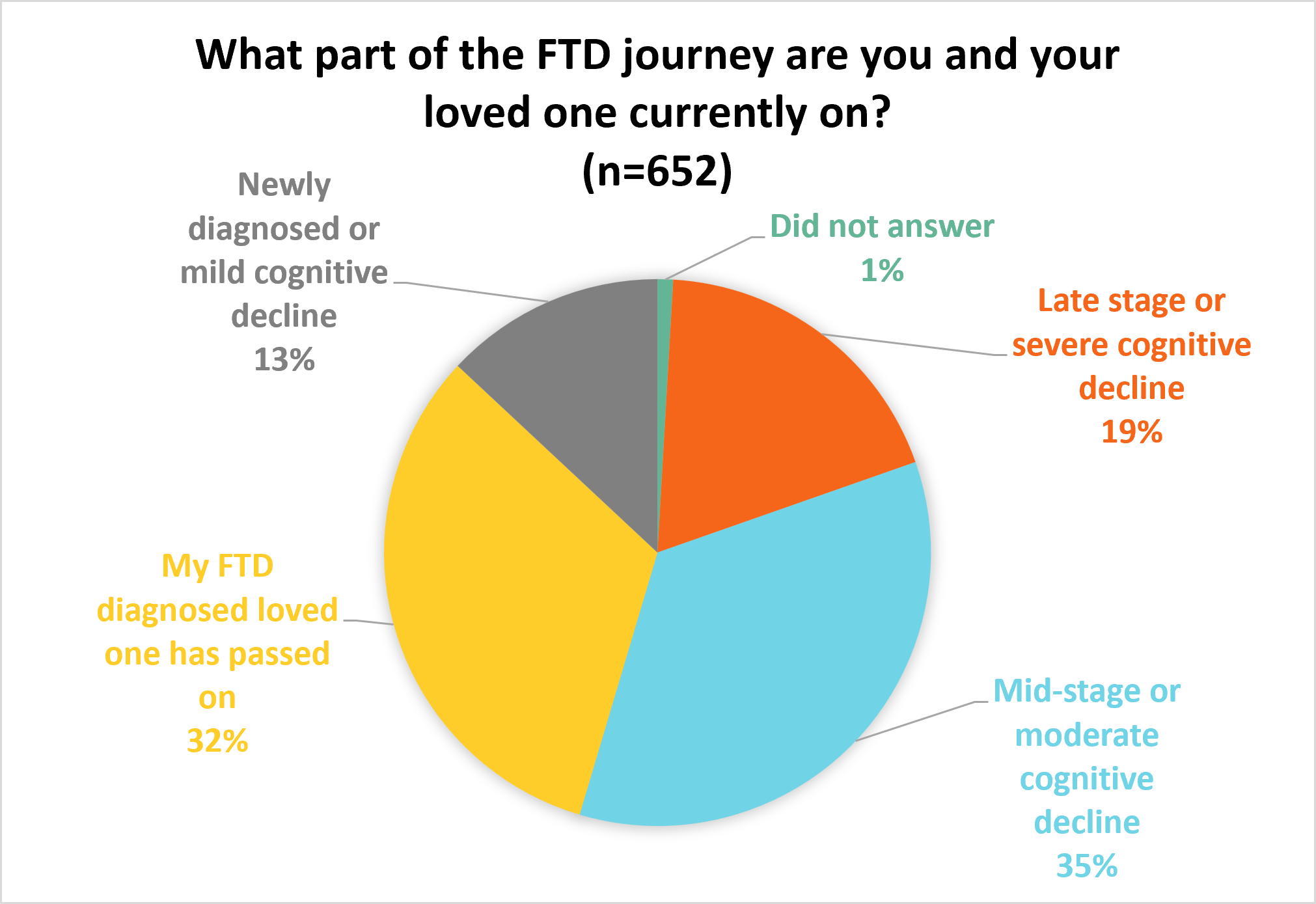
Respondents were at different stages of the FTD journey. The largest group (35.0%) reported that their loved one was in the mid-stage of FTD or experiencing moderate cognitive decline, while 18.7% reported late-stage FTD or severe cognitive decline. Another 13.0% were newly diagnosed or experiencing mild cognitive decline. Nearly one-third (32.4%) indicated that their loved one had passed away, highlighting the experiences of those who have cared for someone with FTD. Less than 1% (0.9%) did not answer this question.
The majority of respondents to this Quick Question were female (66%). 32% were male. Ten people did not identify their gender. Answers came from around world with respondents reporting in from 26 countries, including 47 states plus Washington, DC and Puerto Rico, and seven Canadian provinces.
Together we can find a cure for ftd
The FTD Disorders Registry is a powerful tool in the movement to create therapies and find a cure. Together we can help change the course of the disease and put an end to FTD.

Your privacy is important! We promise to protect it. We will not share your contact information.