


Posts by Mary Krause
How to Find Clinical Trials for FTD
Learn how to find FTD clinical trials and stay informed as new research opportunities emerge.
Read MoreASPIRE-FTD Trial Expands to Fourth Cohort
AviadoBio has expanded its ASPIRE-FTD clinical trial, creating new opportunities for people with GRN mutations to participate in gene therapy research.
Read MoreWhat Care Partners Teach Researchers

Care partners play a vital role in helping researchers understand how the impact of FTD unfolds in daily life. Through their observations, experiences, and participation in the FTD Disorders Registry, care partners provide insights that shape future studies and ensure research reflects the real challenges families face.
Read MoreLouder Than Words: CurePSP Helps People Preserve Their Voice
CurePSP’s Louder Than Words program provides free voice banking and AI voice cloning tools for people living with PSP, CBD, and MSA, helping individuals preserve their voice and stay connected with loved ones even if speech becomes difficult.
Read MoreFTD Is Not One Disease: Why Subtypes Matter for Research
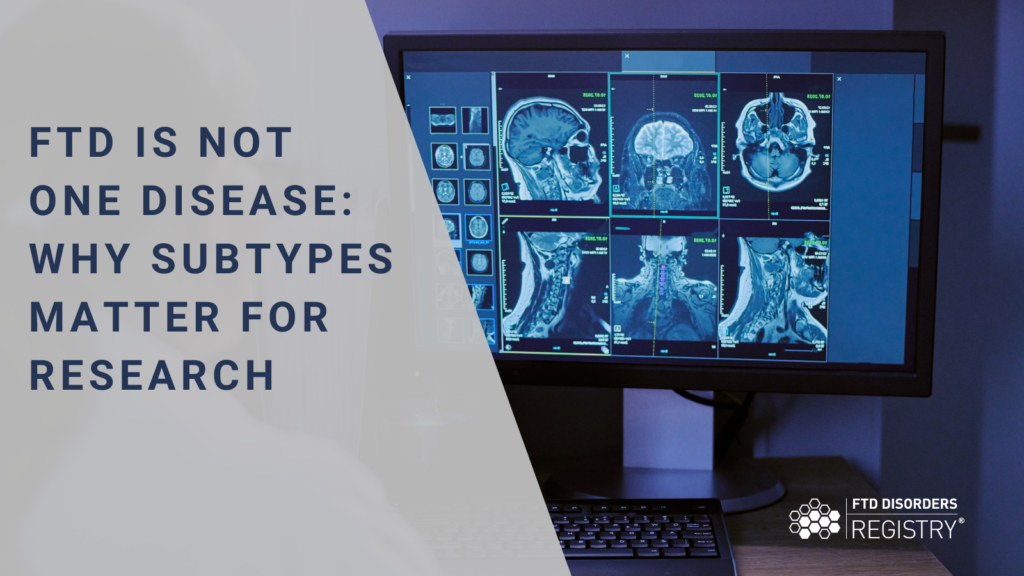
FTD is a spectrum, not a single diagnosis. Recognizing the differences between subtypes helps researchers design smarter studies, accelerate discoveries, and move us closer to effective treatments.
Read MoreBeing Counted is an Act of Hope

Being counted is an act of hope, a way for individuals and families impacted by frontotemporal degeneration to turn their lived experience into momentum for research, visibility, and a future with better diagnosis, care, and treatments.
Read MoreWhy We Ask the Questions We Ask

Ever wonder why the Registry asks about finances or work life? Here’s how those questions help move FTD research forward.
Read MoreYou Joined. Now What? Five Small Ways to Stay Research Ready

You joined the FTD Disorders Registry. Now learn five simple ways to stay research ready and strengthen the future of FTD research.
Read MorePrevail Therapeutics PR006 Trial Discontinued
While the PR006 program has been discontinued, research into FTD continues. Here’s what this update means for the community and the path forward.
Read MoreWhat Makes a Registry “Research Ready”?
What does it really mean for an FTD registry to be research ready, and why does community participation matter so much?
Read More