


PRESS & NEWS
5 Things You Can Do in the FTD Disorders Registry This Month
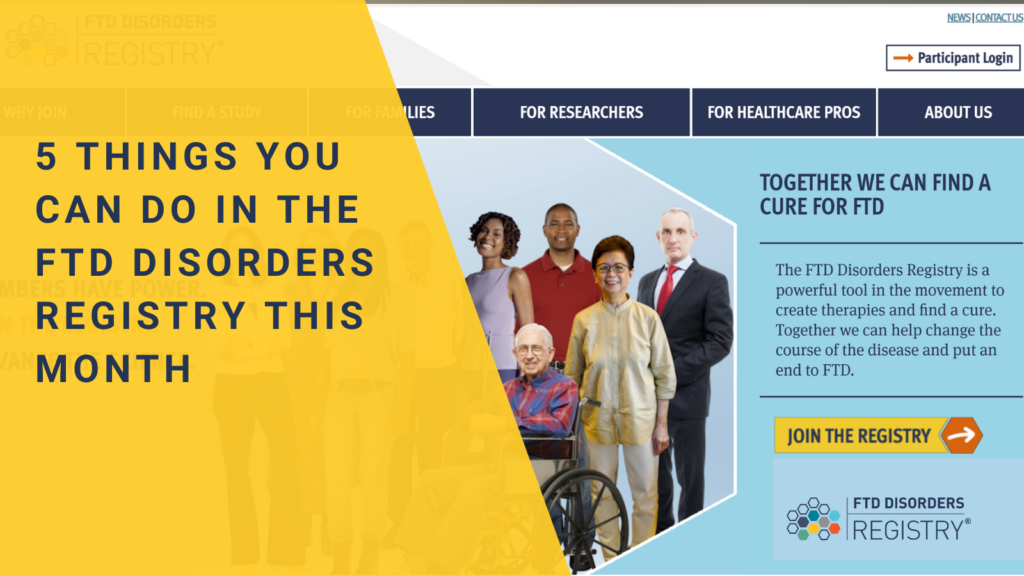
It is important to login to your Registry dashboard regularly to review pending activities and keep your profile up-to-date.
Joining the FTD Disorders Registry is an important first step. But once you are in, there are many ways to stay involved and help strengthen FTD research.
The Registry gives people impacted by frontotemporal degeneration a way to share their experiences, learn about research opportunities, and contribute to a growing body of knowledge about FTD. Your participation does not have to take a lot of time. Even small actions can help researchers better understand the needs, experiences, and priorities of people living with or connected to FTD.
Here are five things you can do in the Registry this month.
1. Update Your Profile
Take a few minutes to log in and review your Registry profile.
Your information may change over time. Maybe your caregiving role has changed. Maybe there has been a new diagnosis in your family. Maybe you want to update how the Registry communicates with you.
Keeping your profile current helps the Registry better understand who is participating and may help connect you with information and opportunities that are relevant to you.
2. Watch for This Month’s Quick Question
Quick Questions are one of the easiest ways to stay active in the Registry.
Each month, the Quick Question typically arrives by email on or around the 15th. These brief questions are designed to gather input on topics that matter to people affected by FTD, including diagnosis, symptoms, care experiences, daily life, and research priorities.
They usually take only a few minutes to answer, but the combined responses can help identify patterns and highlight needs across the FTD community.
Your response may feel small on its own, but when many participants answer, those shared experiences can become powerful information.
3. Complete Available Surveys
If surveys are available in your account, consider completing one this month.
To find available surveys, log in to your Registry account and click My Activities in your dashboard. Depending on your role, surveys may ask about symptoms, diagnosis, family history, care needs, quality of life, or other topics that help researchers better understand FTD.
You do not have to complete everything at once. Choosing one survey and making progress is still a meaningful contribution.
4. Review Your Communication Preferences
One important part of the Registry is the ability to hear about research opportunities and Registry updates.
Take a moment to review the Communication Preferences section of your profile. This is where you can indicate how you would like the Registry to communicate with you, including whether you are open to hearing about future research opportunities.
Being open to research contact does not mean you are agreeing to join a study. It simply means you may receive information about opportunities that could be relevant to you.
Researchers may be looking for people with specific diagnoses, symptoms, family histories, gene variants, care experiences, or geographic locations. Keeping your communication preferences up to date helps make sure the Registry can reach you when an opportunity may be a good fit.
5. Consider Joining the Registry Research Study
If you are eligible and have not already joined, you may want to consider the Registry Research Study.
The study is open to eligible adults in the United States and Canada, including people diagnosed with FTD, current and former care partners, biological family members, and legally authorized representatives of someone with FTD. Study participants can complete research surveys and may also choose to link medical records or share genetic test results.
Information gathered through the Registry Research Study helps build a more detailed understanding of FTD. Deidentified study data may also be made available to qualified researchers by request, helping support studies across the field.
Every Action Helps
Being part of the Registry is not just about signing up. It is about staying connected and contributing what you can, when you can.
This month, consider taking one action: update your profile, answer the Quick Question, complete a survey, review your Communication Preferences, or learn more about the Registry Research Study.
Each step helps strengthen the information available to researchers and brings the field closer to better understanding, better care, and future treatments for FTD.
Together we can find a cure for ftd
The FTD Disorders Registry is a powerful tool in the movement to create therapies and find a cure. Together we can help change the course of the disease and put an end to FTD.

Your privacy is important! We promise to protect it. We will not share your contact information.