


PRESS & NEWS
A Year of Growth and Impact: 2025 at the FTD Disorders Registry
As 2025 comes to a close, we reflect on a year of growth and engagement that underscores the FTD Disorders Registry’s role in advancing research and amplifying the voices of those impacted by FTD.
As 2025 comes to a close, we are reflecting on a year marked by meaningful growth, increased engagement, and expanded impact across the frontotemporal degeneration (FTD) research community. From participant engagement to research support and scientific dissemination, this year underscores the vital role the FTD Disorders Registry plays in accelerating research and amplifying the voices of individuals and families affected by FTD.
Doubling Our Impact
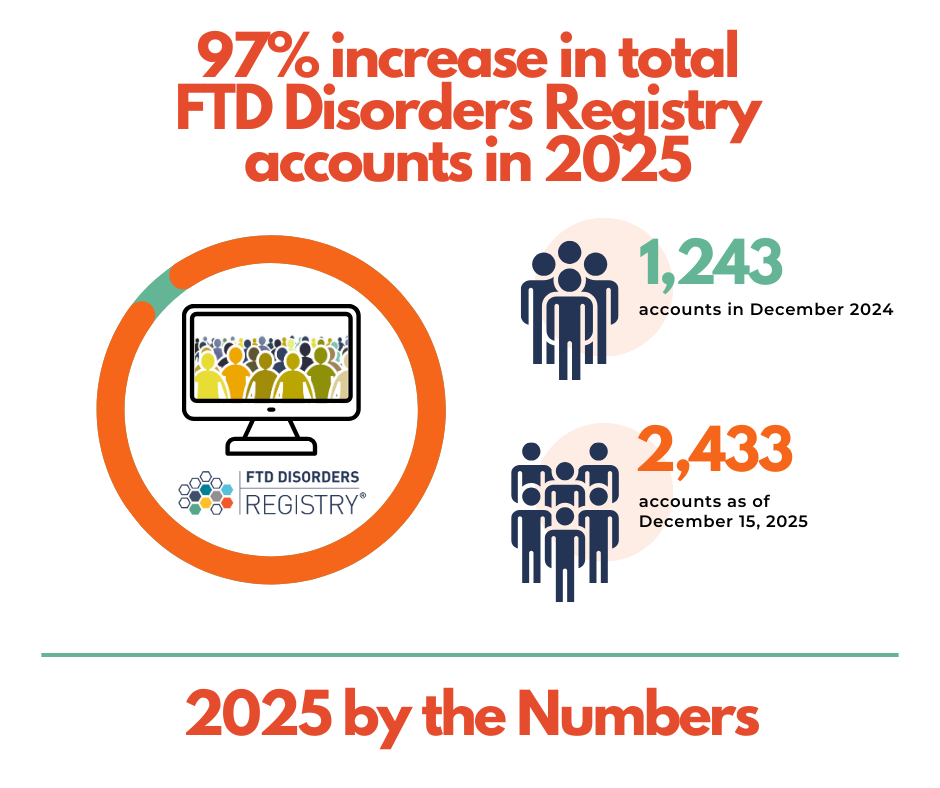
Since launching our new Registry dashboard in May 2024, participation has grown at an extraordinary pace. More than 2,400 account profiles have been created, representing over 2,200 unique users actively engaging with the Registry. In 2025 alone, the total number of Registry accounts increased by 97%.
These numbers matter. Larger, more engaged datasets have real power to advance research. They enable researchers to ask better questions, identify meaningful patterns, and more efficiently design studies and clinical trials that reflect the experiences of people affected by FTD.
Advancing Research Through Data
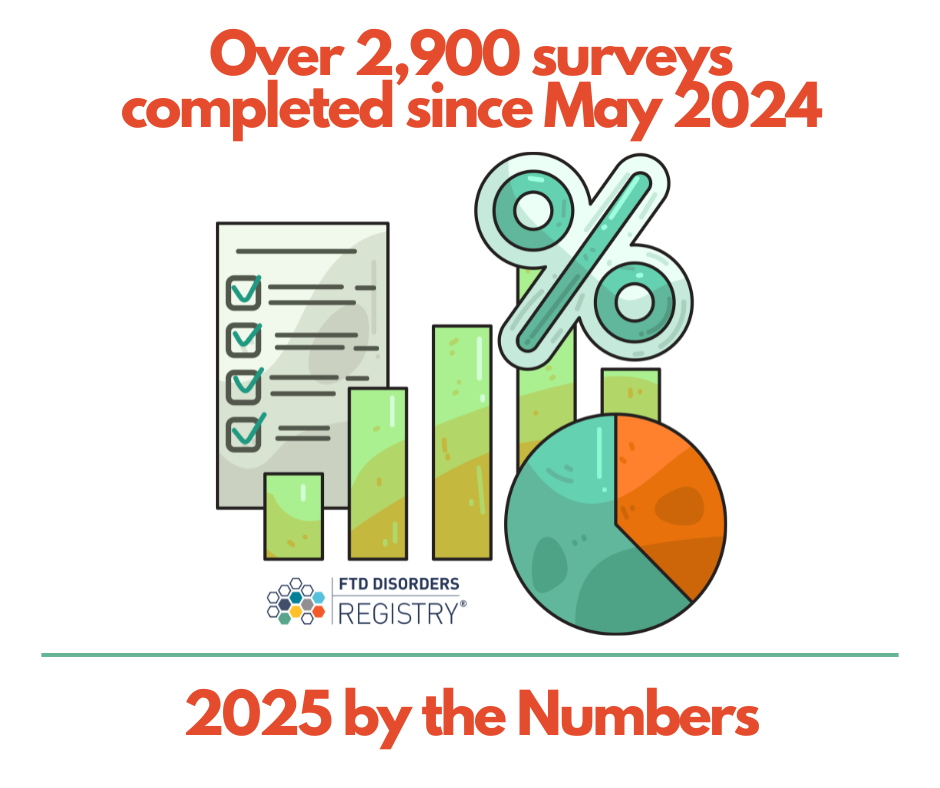
Participant engagement has also translated into robust data contributions. Since May 2024, Registry participants have completed more than 2,900 surveys, providing critical insights into lived experiences, symptoms, care needs, and research priorities. These data are essential for shaping research questions, improving study design, and ensuring that research reflects the real world experiences of the FTD community.
The Registry’s expanding dataset continues to strengthen its value as a resource for investigators seeking to better understand FTD and identify potential participants for studies and clinical trials.
Supporting External Studies
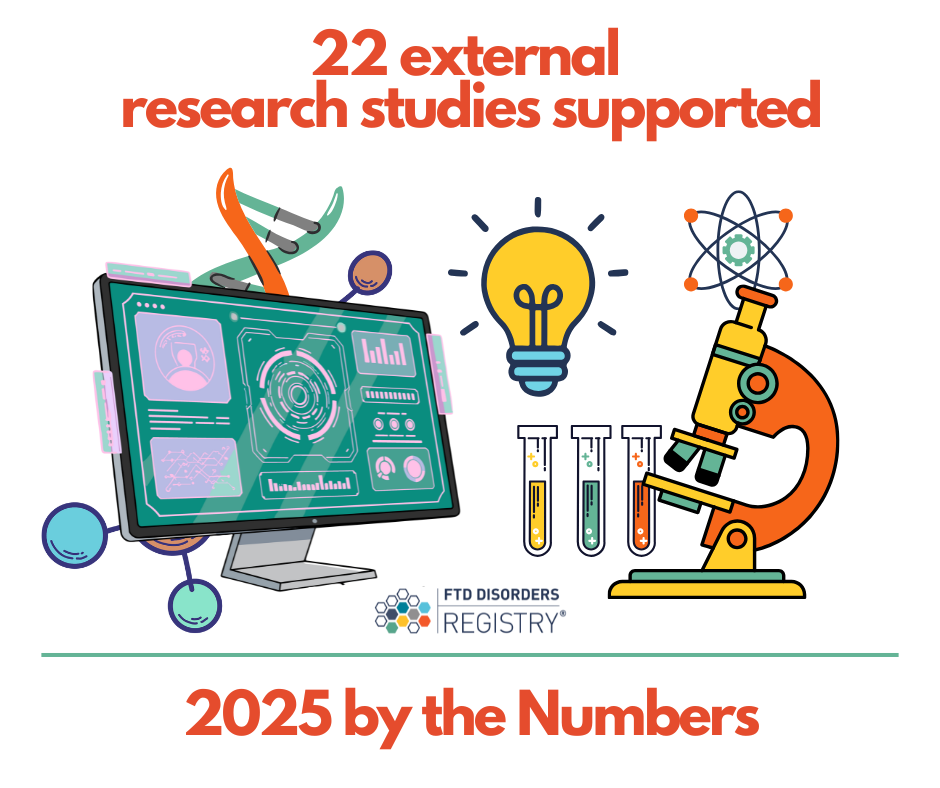
In 2025, the FTD Disorders Registry supported 22 external research studies, helping connect researchers with participants who are interested in contributing to scientific discovery. By serving as a bridge between the research community and people affected by FTD, the Registry plays a key role in reducing barriers to participation and accelerating study timelines.
Each supported study represents progress toward improved understanding, better care strategies, and future therapeutic options for FTD.
Sharing Knowledge and Elevating Registry Research
This year also marked a significant presence for Registry supported research across scientific and community forums. In 2025, Registry data and insights were featured in 15 notable presentations, including:
- 11 scientific abstracts incorporating Registry data
- A breakout session at the AFTD Education Conference
- A presentation at Research Roundtable alongside the FDA
- Educational webinars with AFTD and ALLFTD
These presentations highlight the Registry’s growing contribution to both scientific discourse and community education. They ensure that Registry insights inform research, policy discussions, and public understanding of FTD.
Looking Ahead
As we move into 2026, we remain focused on expanding participation, enhancing data quality, and deepening collaboration with researchers, advocacy partners, and the broader FTD community. None of this progress would be possible without the individuals and families who choose to take part in the Registry and share their experiences.
Thank you for being part of a year that moved FTD research forward in powerful ways. We look forward to building on this momentum together in the year ahead.
Together we can find a cure for ftd
The FTD Disorders Registry is a powerful tool in the movement to create therapies and find a cure. Together we can help change the course of the disease and put an end to FTD.

Your privacy is important! We promise to protect it. We will not share your contact information.