


PRESS & NEWS
FTD Disorders Registry Highlights Research at AAIC 2026
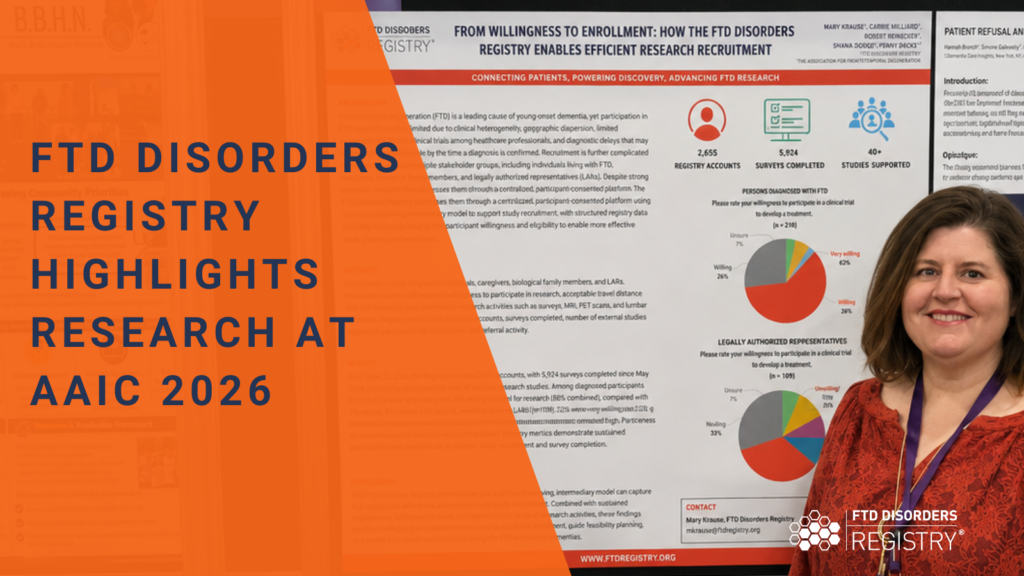
The FTD Disorders Registry presented a poster highlighting the value of the Registry at AAIC 2026.
The FTD Disorders Registry was proud to present new research at the Alzheimer's Association International Conference (AAIC) 2026 in London, United Kingdom. The poster, "From Willingness to Enrollment: How the FTD Disorders Registry Enables Efficient Research Recruitment," showcased how the Registry is helping address one of the greatest challenges in frontotemporal degeneration (FTD) research: connecting willing participants with research opportunities.
As the world's largest international conference dedicated to dementia research, AAIC brings together scientists, clinicians, industry leaders, and advocacy organizations to share the latest advances in research. Presenting at AAIC provides an opportunity to demonstrate how participant-centered infrastructure can help accelerate progress in FTD research.
Demonstrating a Research-Ready Community
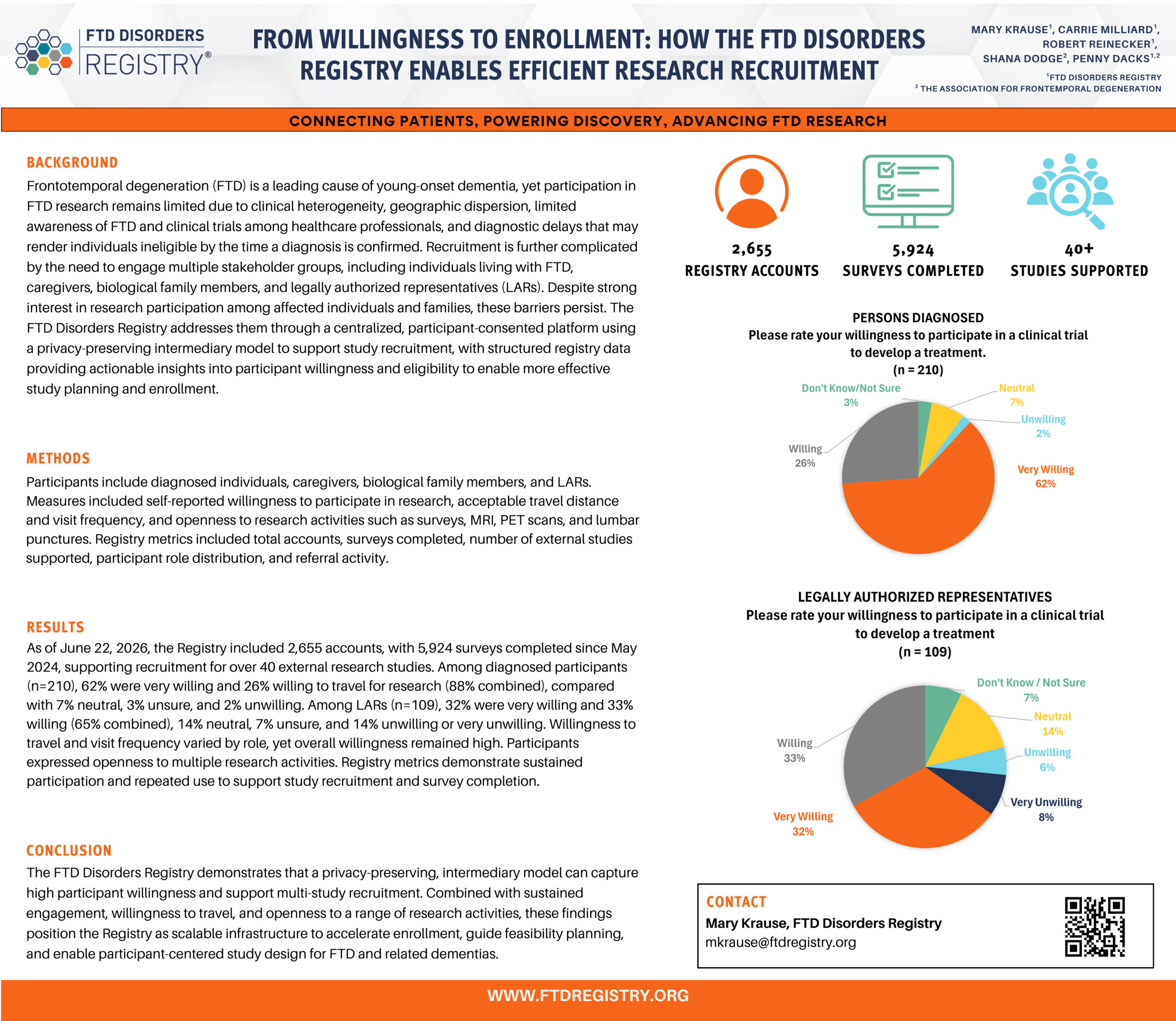
The poster highlighted the Registry's continued growth and engagement. As of June 22, 2026, the Registry included 2,655 participant accounts, with 5,924 surveys completed since May 2024, while supporting recruitment for more than 40 research studies.
Beyond these numbers, the data demonstrate something even more important: the FTD community is ready to participate in research.
Among Registry participants living with an FTD diagnosis who completed the research participation survey, 88% reported being willing or very willing to travel for research, while legally authorized representatives (LARs) also demonstrated strong willingness to support participation. Participants also expressed openness to a wide range of research activities, including surveys, MRI, PET imaging, and lumbar punctures.
These findings provide valuable information for researchers designing studies and planning recruitment strategies. Understanding participants' willingness to travel, visit study sites, and complete different research procedures can help make studies more participant-centered while improving enrollment planning.
Why the Registry Matters
Recruiting participants for FTD research presents unique challenges. FTD is relatively rare, diagnoses are often delayed, and participants are geographically dispersed. Researchers must also engage multiple groups, including people living with FTD, current and former care partners, biological family members, and legally authorized representatives.
The FTD Disorders Registry was created to help overcome these barriers through a secure, participant-consented platform that connects the FTD community with research opportunities while protecting participant privacy. By collecting information directly from participants and facilitating targeted study invitations, the Registry helps researchers identify and reach individuals who may be eligible for studies.
Looking Ahead
The research presented at AAIC reinforces that the Registry is more than a participant database. It is research infrastructure that provides researchers with meaningful insights into participant engagement, willingness, and recruitment feasibility.
As the Registry continues to grow, these data will help researchers design better studies, improve recruitment strategies, and ultimately accelerate the development of treatments for FTD.
Every new Registry participant strengthens this effort. Together, the FTD community is demonstrating that it is engaged, research-ready, and committed to advancing discoveries that will improve the lives of future generations affected by FTD.
Together we can find a cure for ftd
The FTD Disorders Registry is a powerful tool in the movement to create therapies and find a cure. Together we can help change the course of the disease and put an end to FTD.

Your privacy is important! We promise to protect it. We will not share your contact information.