


PRESS & NEWS
Quick Question April 2026 Result:
A total of 533 community members shared their experiences, offering valuable insight into the diagnostic journey. These responses help deepen our understanding of the challenges individuals and families face and highlight opportunities to improve earlier recognition and access to care.
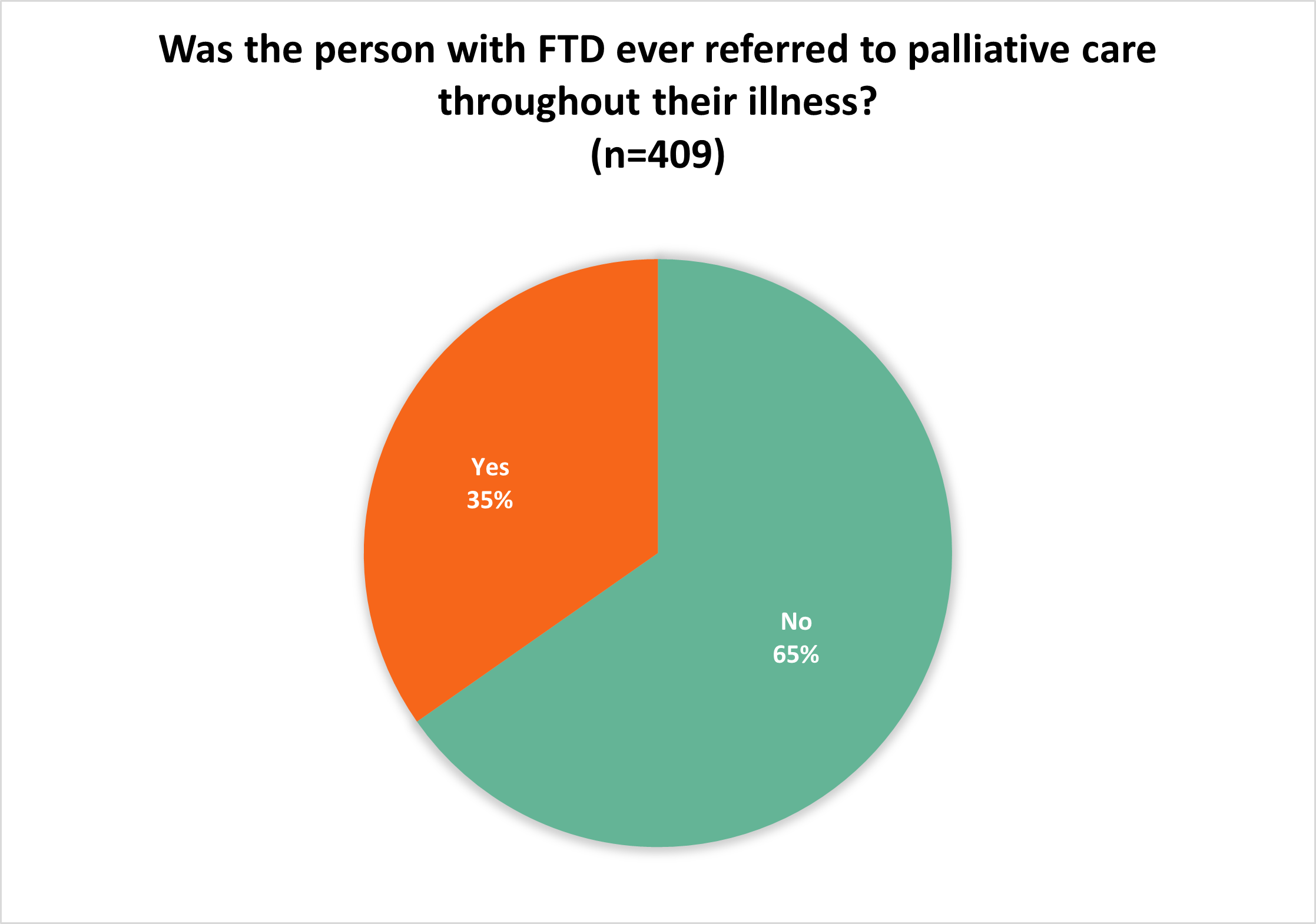
In the FTD Disorders Registry April Quick Question, we asked: “Was the person with FTD ever referred to palliative care throughout their illness?” 409 people responded. Sixty-five percent of respondents said no. Only 35% of respondents said the person with FTD had received a palliative care referral. The remaining results, including additional details and analysis, will be used in a future abstract and shared here after being presented.
These responses highlight an important conversation within the frontotemporal degeneration (FTD) community: understanding what palliative care is, and how it can support people living with FTD and their care partners throughout the course of the disease.
Palliative Care and FTD
Palliative care is specialized medical care focused on improving quality of life for people living with serious illnesses. It is designed to help manage symptoms, provide emotional support, assist with complex medical decisions, and coordinate care among healthcare providers. Importantly, palliative care is not the same as hospice care. While hospice is generally reserved for the final stage of life, palliative care can begin at any point after diagnosis and can be provided alongside treatments and therapies.
For individuals with FTD, palliative care may help address challenges such as communication difficulties, changes in behavior, mobility concerns, swallowing problems, sleep issues, or caregiver stress. Palliative care teams often include doctors, nurses, social workers, and counselors who work together to support both the person diagnosed and their family. This support can also include conversations about goals of care, future planning, and maintaining comfort and dignity throughout the illness journey.
Many families are unaware that palliative care is available long before end-of-life care is needed. Early referral may provide additional resources, guidance, and support as needs change over time. Families can also request a palliative care consultation directly from their doctor or healthcare team if they feel additional support may be helpful.
Palliative Care Resources for FTD
For more information about palliative care and FTD, families can explore this resource from The Association for Frontotemporal Degeneration (AFTD).
People living with FTD, care partners, and family members who have questions or need support can also reach out to the AFTD HelpLine. The HelpLine provides information, resources, and guidance for navigating the challenges of FTD.
Learn more about the AFTD HelpLine.
As researchers and families continue to learn more about the role of palliative care in FTD, increasing awareness may help ensure that more people receive supportive services earlier in the disease journey. Conversations about palliative care can sometimes feel difficult, but they are ultimately centered on improving quality of life, supporting caregivers, and helping families feel more prepared and connected throughout every stage of FTD.
Together we can find a cure for ftd
The FTD Disorders Registry is a powerful tool in the movement to create therapies and find a cure. Together we can help change the course of the disease and put an end to FTD.

Your privacy is important! We promise to protect it. We will not share your contact information.