


PRESS & NEWS
Quick Question December 2025 Result:
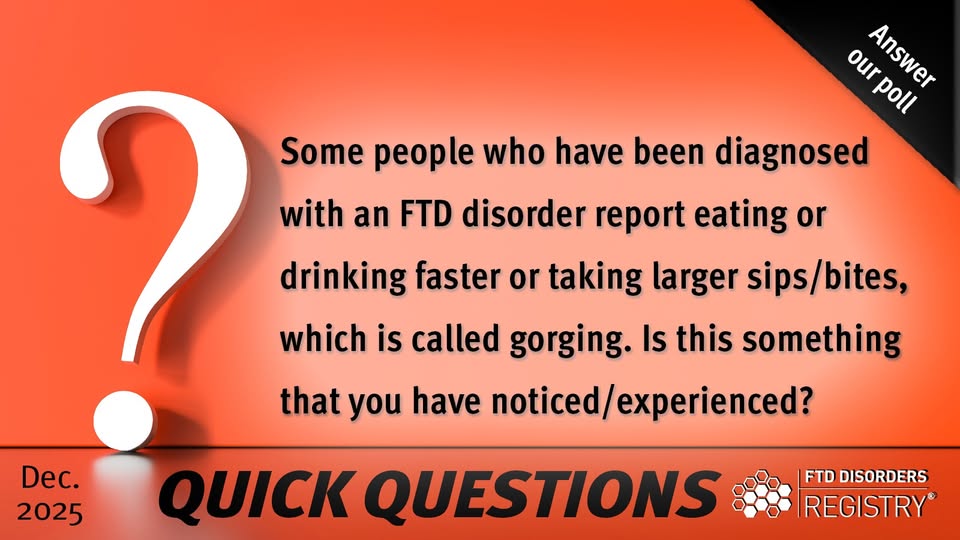
712 people responded and your responses are already helping us deepen scientific understanding of this symptom and will contribute directly to future research.
In our most recent Quick Question, we asked participants and caregivers about gorging, a behavior that is seen in some forms of frontotemporal degeneration (FTD) but often misunderstood, even by healthcare providers.
712 people responded and your responses are already helping us deepen scientific understanding of this symptom and will contribute directly to future research.
What Is Gorging in FTD?
Gorging refers to compulsive overeating, often characterized by eating very large quantities of food in a short period of time, difficulty stopping once eating begins, and a strong preference for specific foods, especially sweets or carbohydrates.
In FTD, gorging is not about hunger or willpower. It is a behavioral symptom driven by changes in the brain regions that regulate impulse control, reward, and decision-making. People living with FTD may:
- Eat far beyond satiety
- Seek out the same foods repeatedly
- Eat rapidly or continuously
- Have difficulty recognizing social norms around eating
Gorging is particularly associated with behavioral variant FTD (bvFTD), but it can appear across different FTD diagnoses.
Why Gorging Happens
FTD affects the frontal and temporal lobes of the brain, particularly areas involved in:
- Impulse control
- Emotional regulation
- Reward processing
- Awareness of consequences
As these systems change, eating behaviors can shift dramatically. Understanding gorging as a neurological symptom, not a choice, can help reduce stigma and frustration for families and caregivers.
Support and Resources for Families
Managing gorging can be challenging, both practically and emotionally. The Association for Frontotemporal Degeneration (AFTD) offers trusted, practical resources to help families navigate these changes, including resources on how to manage compulsive behavior. They also offer a HelpLine to address your specific concerns and support groups for those impacted by FTD disorders.
If gorging is affecting your household, AFTD’s resources can provide reassurance, strategies, and community support.
How Your Quick Question Responses Are Being Used
Your participation matters. The data collected from this Quick Question are being analyzed and prepared for a scientific abstract that will be submitted to an upcoming professional conference. This means your lived experience will help:
- Inform researchers and clinicians
- Improve understanding of how gorging presents across the FTD community
- Elevate caregiver and participant voices in scientific settings
Once the abstract is accepted and the findings are presented, we will share a summary of the results with the Registry community.
Thank You for Sharing Your Experience
Every Quick Question response strengthens the collective picture of life with FTD. By taking a few minutes to answer, you are helping turn real-world experience into research that can shape awareness, education, and care.
Numbers have power, and your voice does too.
Together we can find a cure for ftd
The FTD Disorders Registry is a powerful tool in the movement to create therapies and find a cure. Together we can help change the course of the disease and put an end to FTD.

Your privacy is important! We promise to protect it. We will not share your contact information.