


PRESS & NEWS
Quick Question February 2026 Result:
534 individuals responded, providing insight into how symptoms of FTD can sometimes intersect with law enforcement
In February, the FTD Disorders Registry’s Quick Question explored a sensitive issue that can arise as a result of the behavioral and cognitive changes associated with frontotemporal degeneration. We asked participants, “Have you (or your loved one) ever had contact with the criminal justice system because of behaviors or symptoms related to FTD?” Examples included being accused of a crime, detained, or arrested. A total of 534 individuals responded, providing insight into how symptoms of FTD can sometimes intersect with law enforcement and legal systems that may not recognize these behaviors as part of a neurological condition.
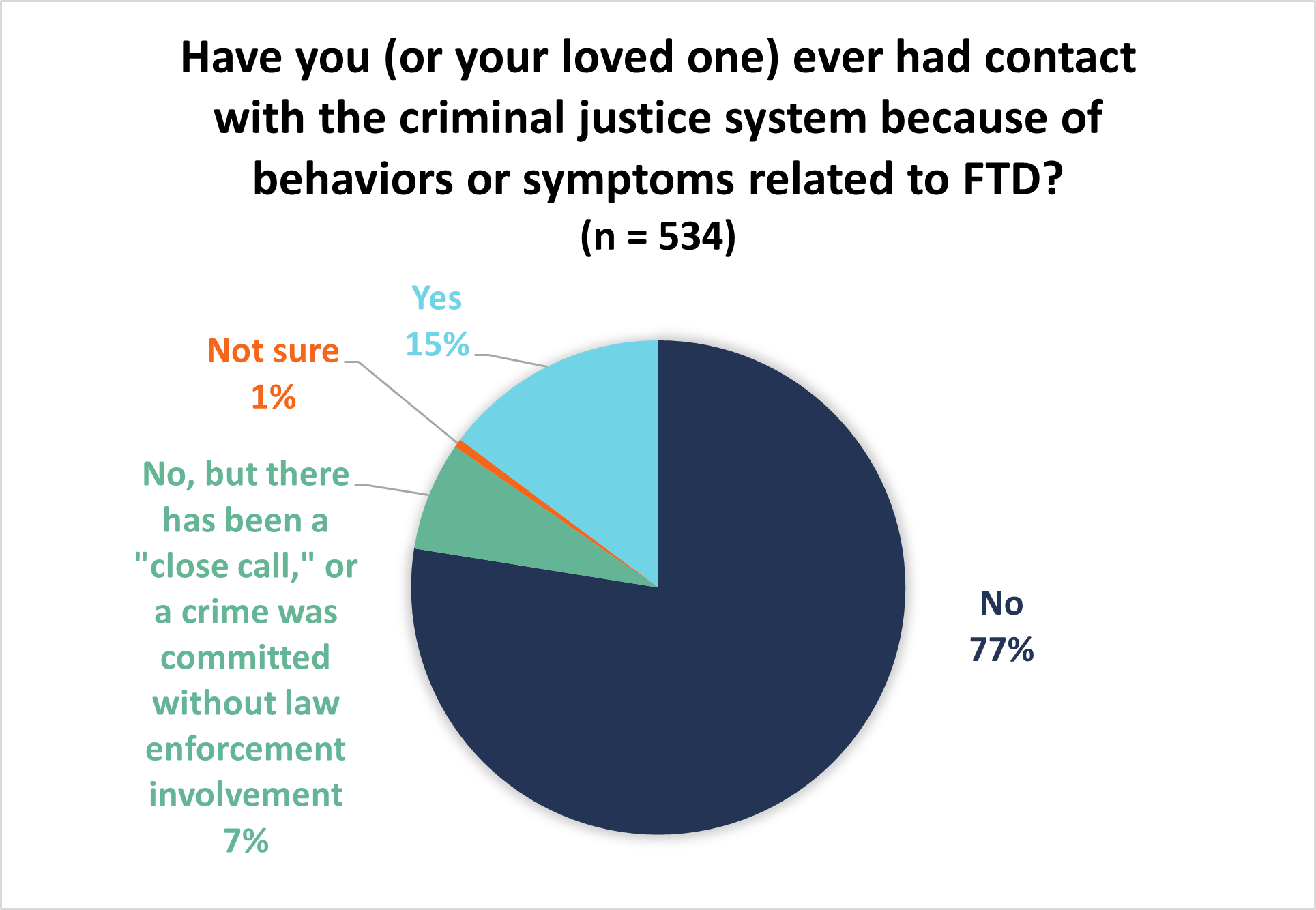
Among the 534 respondents, most reported no contact with the criminal justice system related to FTD symptoms. Overall, 77% said they or their loved one had not had such contact. However, 7% reported a close call or a situation in which a crime may have occurred but law enforcement was not involved. Another 15% said there had been contact with the criminal justice system related to behaviors or symptoms of FTD, and 1% indicated they were not sure.
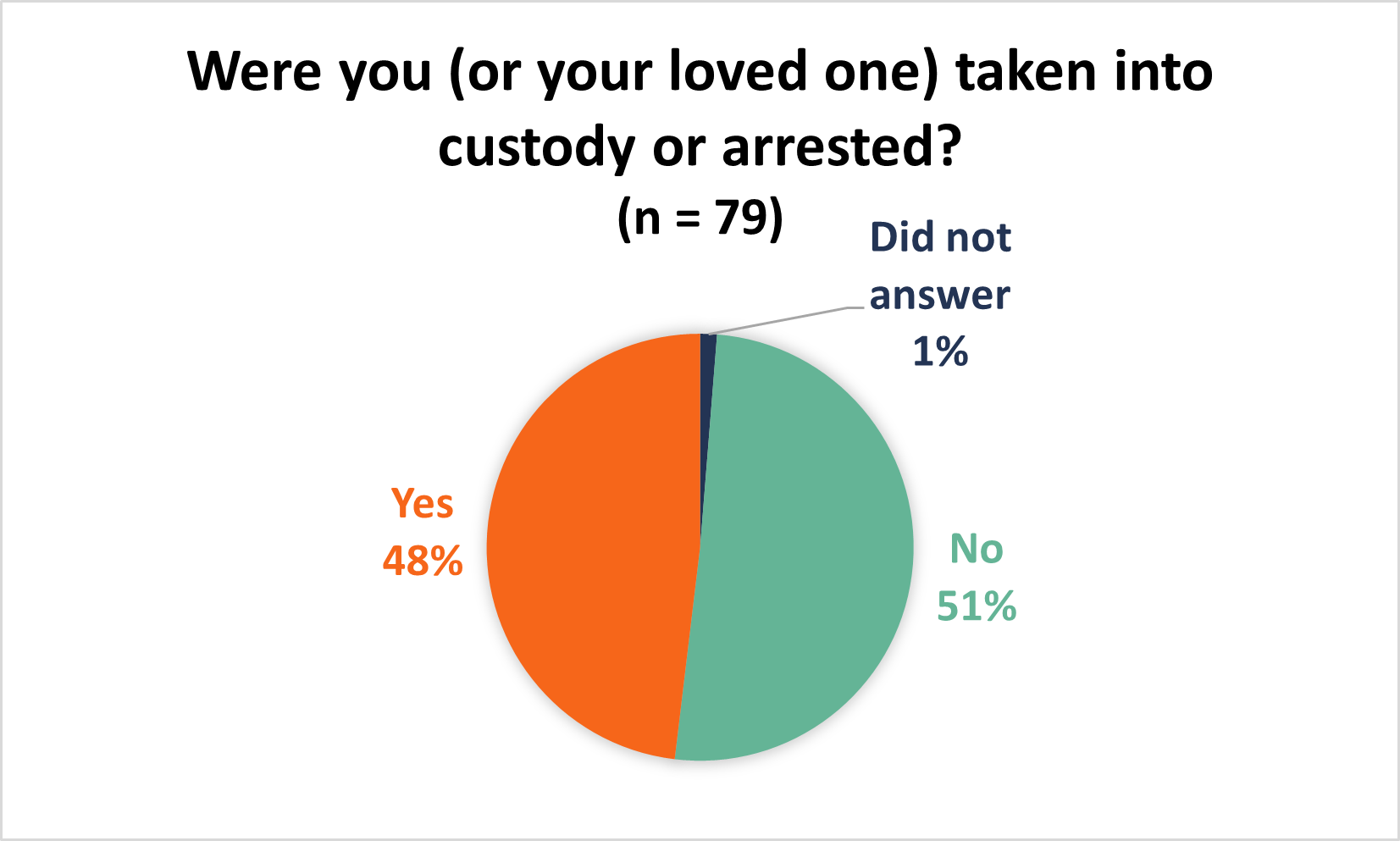
Among respondents who reported contact with the criminal justice system related to FTD symptoms, nearly half indicated that they or their loved one had been taken into custody or arrested. Overall, 48% said yes, while 51% said no. One respondent did not answer this question. These responses suggest that when interactions with the criminal justice system occur, they can sometimes escalate to formal detention or arrest.
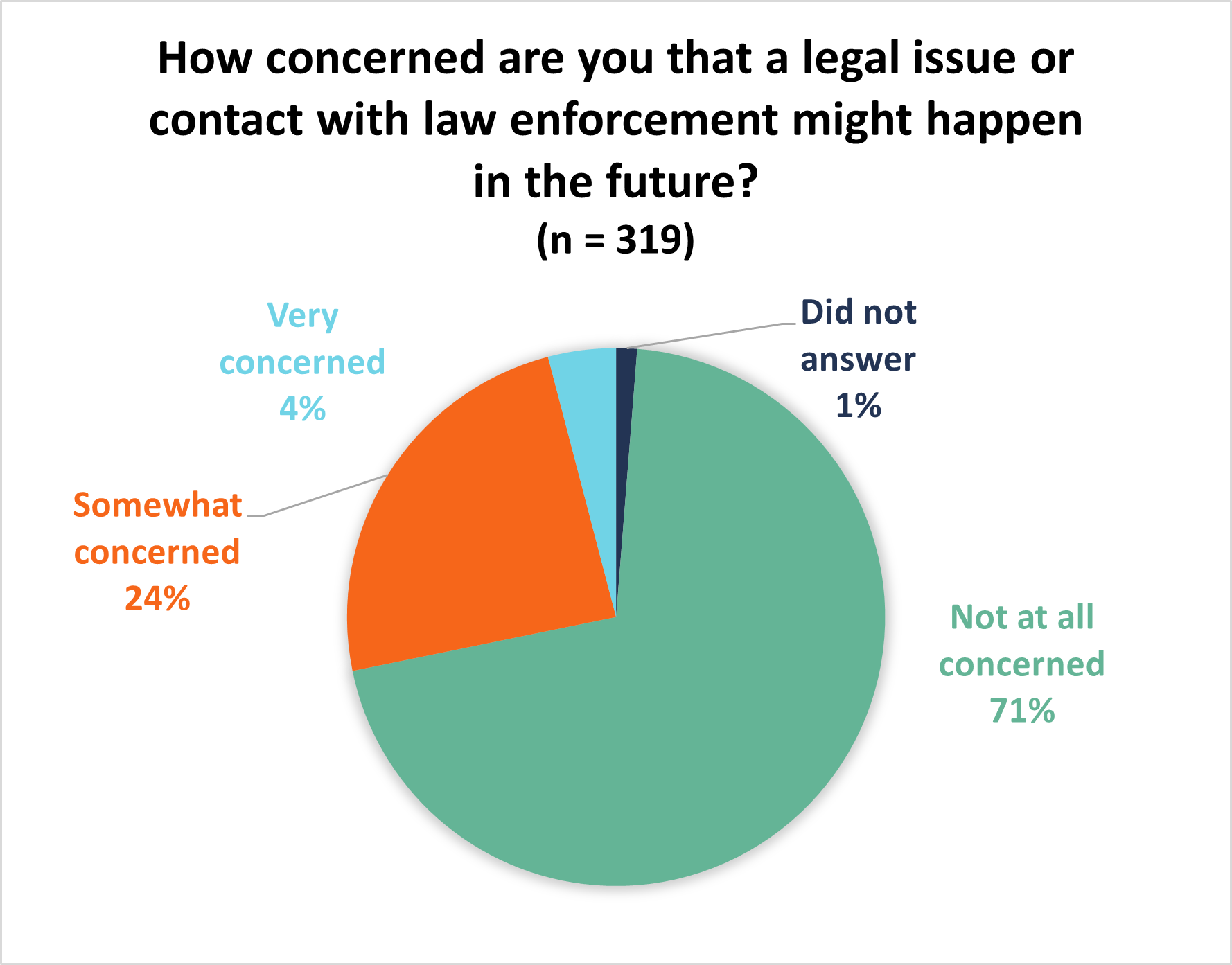
We also asked respondents who said there had been no contact with the criminal justice system, a close call, or that they were not sure how concerned they were that a legal issue or contact with law enforcement might occur in the future. Among those whose loved one diagnosed with FTD is still living, most reported little concern. Overall, 71% said they were not at all concerned, 24% said they were somewhat concerned, and 4% said they were very concerned. Four respondents did not answer the question.
Taken together, these responses show that while most families have not experienced contact with the criminal justice system related to FTD, a meaningful portion have faced situations where symptoms intersect with legal or law enforcement settings. These findings highlight the importance of increasing awareness and understanding of FTD among legal and law enforcement professionals, as the behavioral and cognitive changes associated with some FTD disorder subtypes can sometimes be misunderstood in public or community settings. They also underscore the need for increased support and resources for families who may be navigating challenging behavioral symptoms and the potential legal consequences that can arise from them.
Demographics
Among respondents, the largest group was spouses answering on behalf of a person diagnosed with FTD (47%). We also had strong representation from biological family members answering on behalf of a person diagnosed with FTD (22%) and persons diagnosed with FTD answering for themselves (17%). In addition, 3% were spouses answering for themselves, 4% were biological family members answering for themselves, and caregivers answering on behalf of a person diagnosed with FTD (3%). A small number of respondents identified as other (2%), caregivers answering for themselves (1%), a friend answering on behalf of an FTD diagnosed person (1%) or a friend answering for themselves (less than 1%).
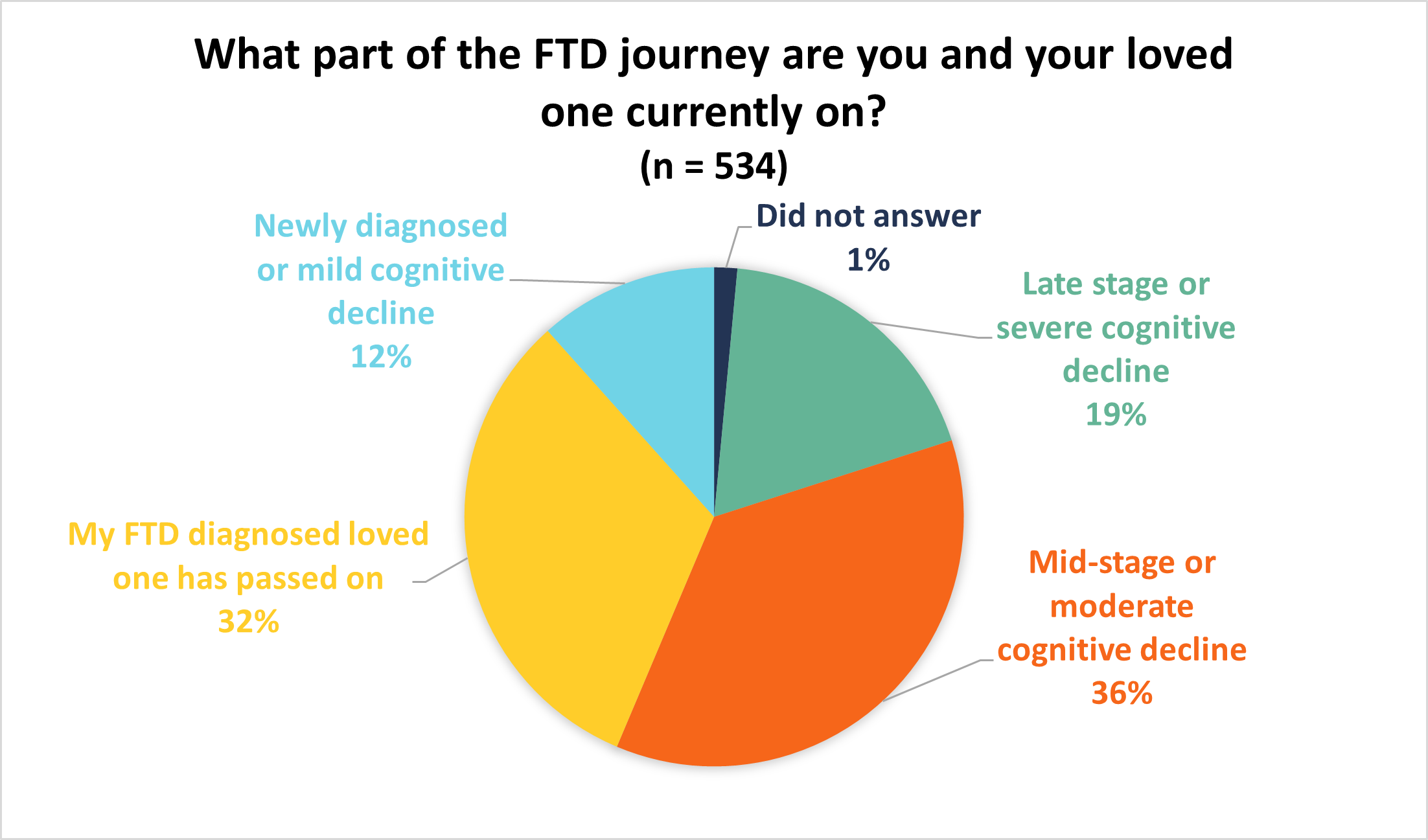
We received input on this Quick Question from all stages of the FTD journey. The largest group were those in the middle stages of FTD (36%), but we also received input from those whose FTD-diagnosed loved one had already passed away (32%), those in the late-stage of FTD (19%), and those newly diagnosed (12%).
The majority of respondents to this Quick Question were female (66%). 33% were male. Seven people did not identify their gender. Answers came from around world with respondents reporting in from 21 countries, including 45 states, the District of Columbia and Puerto Rico, plus five Canadian provinces.
Together we can find a cure for ftd
The FTD Disorders Registry is a powerful tool in the movement to create therapies and find a cure. Together we can help change the course of the disease and put an end to FTD.

Your privacy is important! We promise to protect it. We will not share your contact information.