


PRESS & NEWS
Quick Question January 2026 Result:
The highest response was access to specialists with FTD experience with 20.4%. There was also strong support for emotional or mental health support for patient and/or caregiver at 15.2% and ...
In the FTD Disorders Registry January Quick Question, we asked about the improvements needed in care for those impacted by FTD disorders. 473 people responded, sharing their insights on their greatest needs.
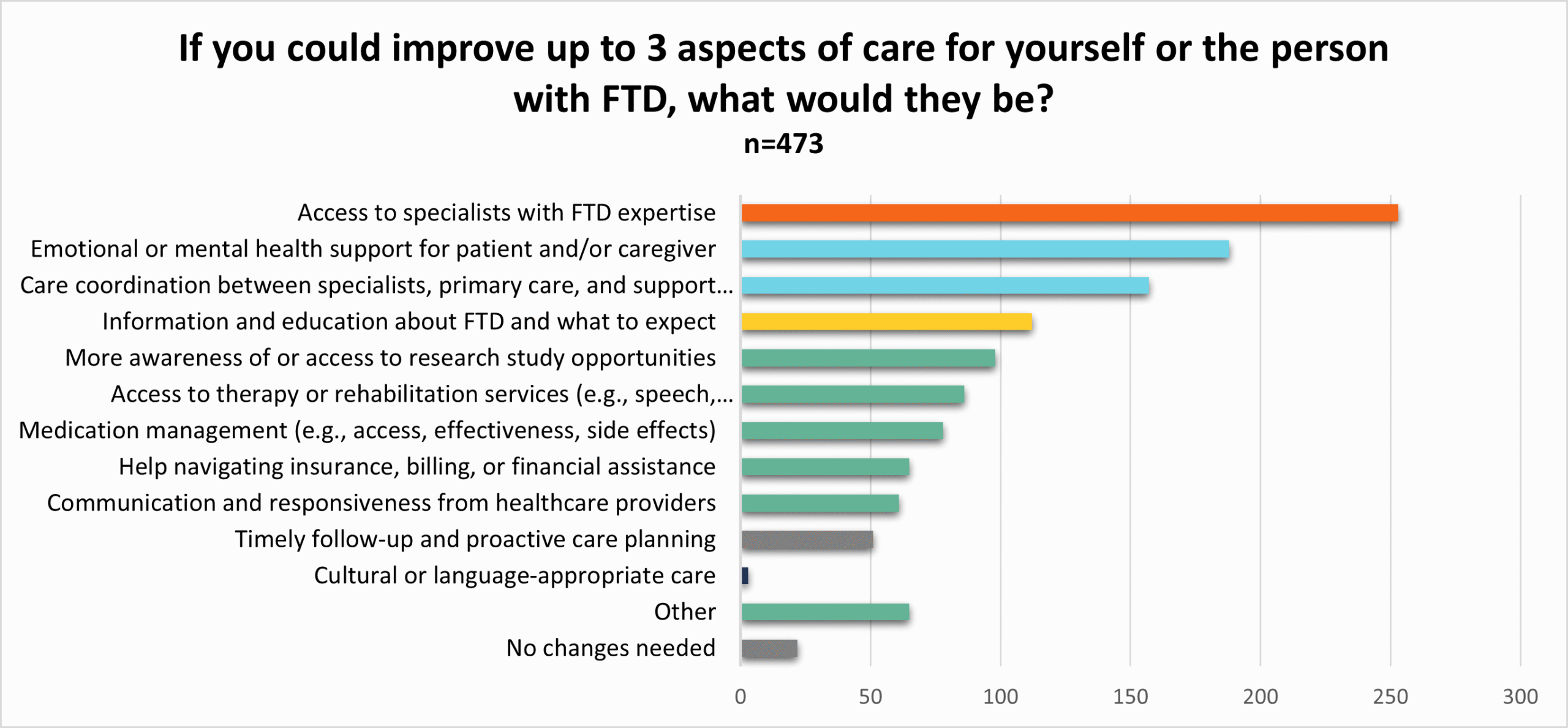
In response to the question, “If you could improve up to three aspects of care for yourself or the person with FTD, what would they be?,” respondents chose up to three answers. The highest response was access to specialists with FTD experience with 20.4%. There was also strong support for emotional or mental health support for patient and/or caregiver at 15.2% and care coordination between specialists, primary care, and support services at 12.7%. Respondants also expressed support for information and education about FTD and what to expect (9.0%), more awareness of or access to research study opportunities (7.9%), access to therapy or rehabilitation services (6.9%), medication management (6.3%), help navigating insurance, billing, or financial assistance (5.2%), communication and responsiveness from healthcare providers (4.9%), timely follow-up and proactive care planning (4.1%). 5.2% of respondents provided their own suggestion, and 1.8% said no changes were needed. A need for cultural or language-appropriate care received 0.2%.
Demographics
Among respondents, the largest group were spouses answering on behalf of a person diagnosed with FTD (38.1%). We also had strong representation from people diagnosed with FTD answering for themselves (23.9%) and from biological family members answering on behalf of a person diagnosed with FTD (16.5%). In addition, 7.6% were spouses answering for themselves, 6.1% were biological family members answering for themselves, 3.6% were caregivers answering on behalf of a person diagnosed with FTD. A small number of respondents identified as caregivers answering for themselves (1.5%), a friend answering on behalf of an FTD diagnosed person (less than 1%) or a friend answering for themselves (less than 1%).
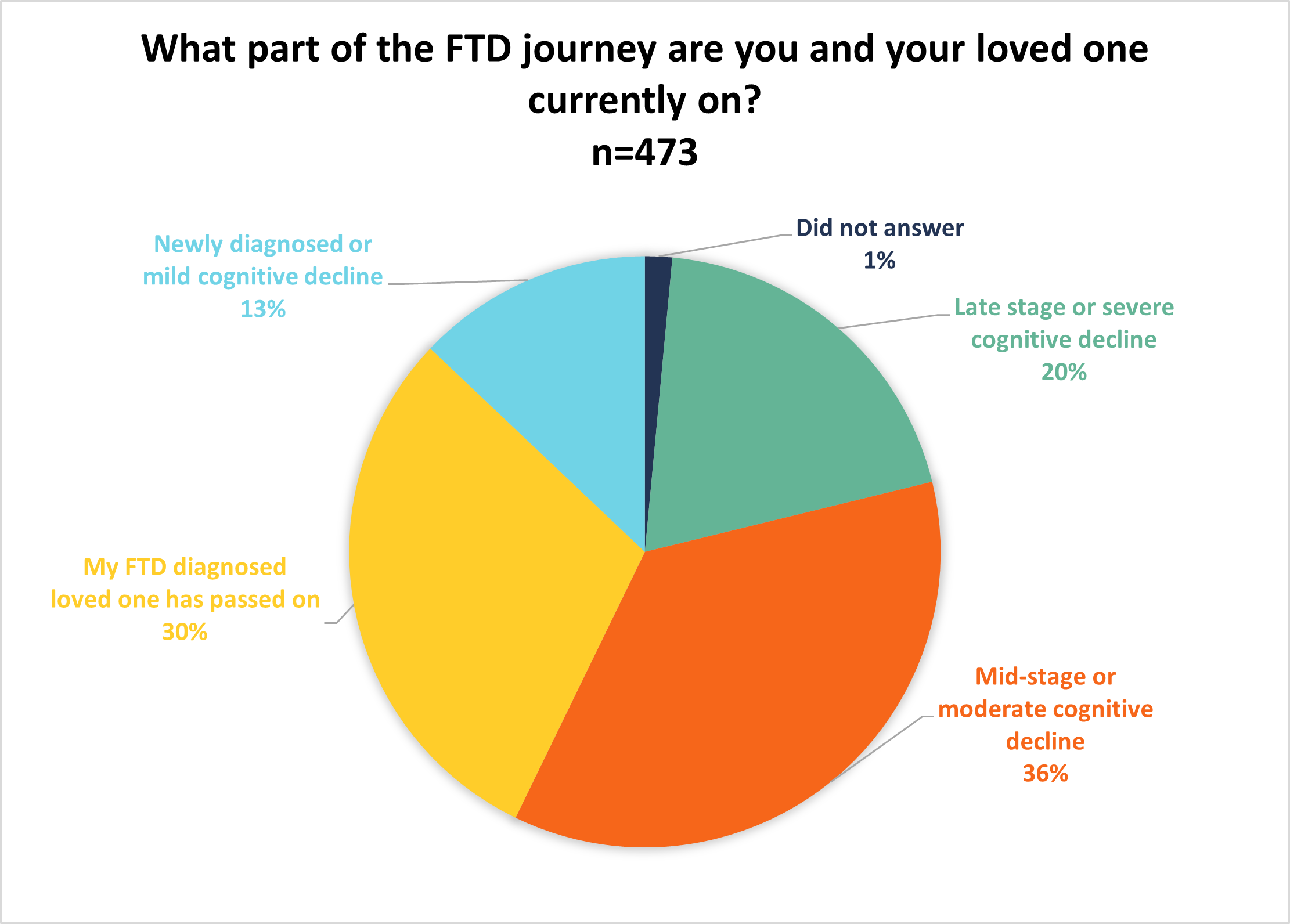
We received input on this Quick Question from all stages of the FTD journey. The largest group were those in the middle stages of FTD (36%), but we also received input from those whose FTD-diagnosed loved one had already passed away (30%), those in the late-stage of FTD (20%), and those newly diagnosed (13%).
The majority of respondents to this Quick Question were female (68.4%). 30.1% were male. Seven people did not identify their gender. Answers came from around world with respondents reporting in from 23 countries, including 47 states, the District of Columbia and Puerto Rico, plus six Canadian provinces.
Together we can find a cure for ftd
The FTD Disorders Registry is a powerful tool in the movement to create therapies and find a cure. Together we can help change the course of the disease and put an end to FTD.

Your privacy is important! We promise to protect it. We will not share your contact information.