


PRESS & NEWS
Quick Question July 2026 Result:
We heard from 500 members of the FTD community, offering valuable insight into how technology is being used to navigate the challenges of FTD disorders.
Technology is becoming an increasingly important part of managing daily life with FTD and supporting care partners. For our July Quick Question, the FTD Disorders Registry asked, “Have you used any technology tools to help manage FTD symptoms or caregiving?” We heard from 500 members of the FTD community, offering valuable insight into how technology is being used to navigate the challenges of FTD disorders.
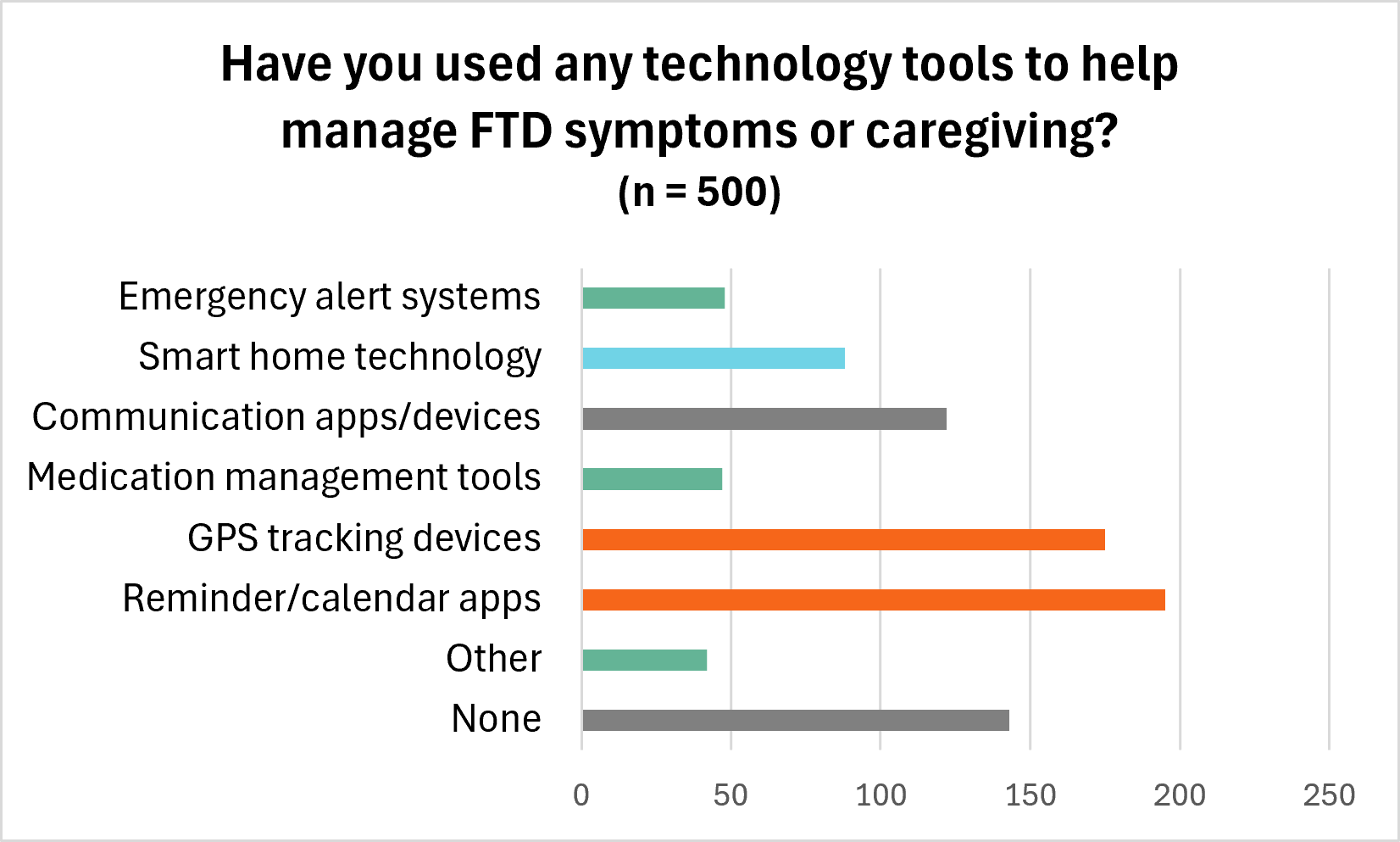
Among the 500 respondents, 39% reported using reminder or calendar apps, while 35% use GPS tracking devices to help with caregiving. 24% use communication apps or devices, and 18% use smart home technology. Medication management tools were used by 9%, while 10% reported using emergency alert systems. Another 8% selected “other,” and 29% said they had not used any technology tools. Respondents were able to select more than one answer.
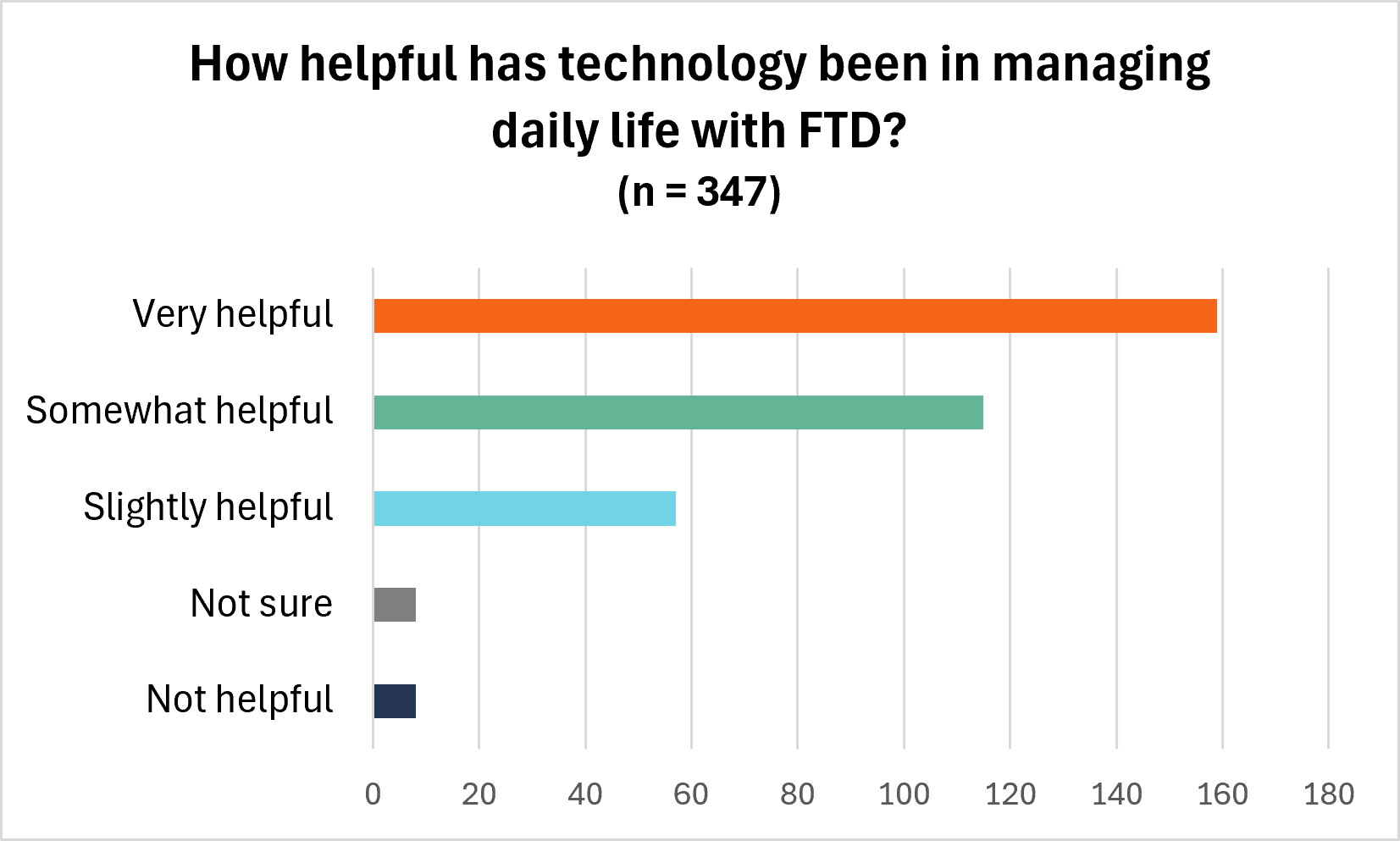
Among those who reported using technology to help manage FTD symptoms or caregiving, 46% said technology has been very helpful in managing daily life with FTD. Another 33% found it somewhat helpful, while 16% said it was slightly helpful. Just 2% said technology was not helpful, and 2% were not sure.
These results suggest that while technology is not part of every family’s FTD journey, it has become a valuable source of support for many. From staying organized and enhancing communication to improving safety and independence, digital tools are helping people with FTD and their care partners navigate the everyday challenges of living with FTD. As new tools continue to emerge, understanding what the community is using can help highlight opportunities to better support those living with FTD and those who care for them.
Demographics
Among respondents, the largest group was spouses answering on behalf of a person diagnosed with FTD (46%). We also had strong representation from persons diagnosed with FTD answering for themselves (22.4%) and biological family members answering on behalf of a person diagnosed with FTD (13.4%). In addition, 5.8% were spouses answering for themselves, 4% were caregivers answering on behalf of the person diagnosed with FTD, 3.2% were biological family members answering for themselves, and 2% were individuals carrying a gene associated with FTD with no symptoms and caregivers answering for themselves. A small number of respondents identified as other (1%) or a friend or a non-biological family member answering on behalf of an FTD diagnosed person (less than 1%).
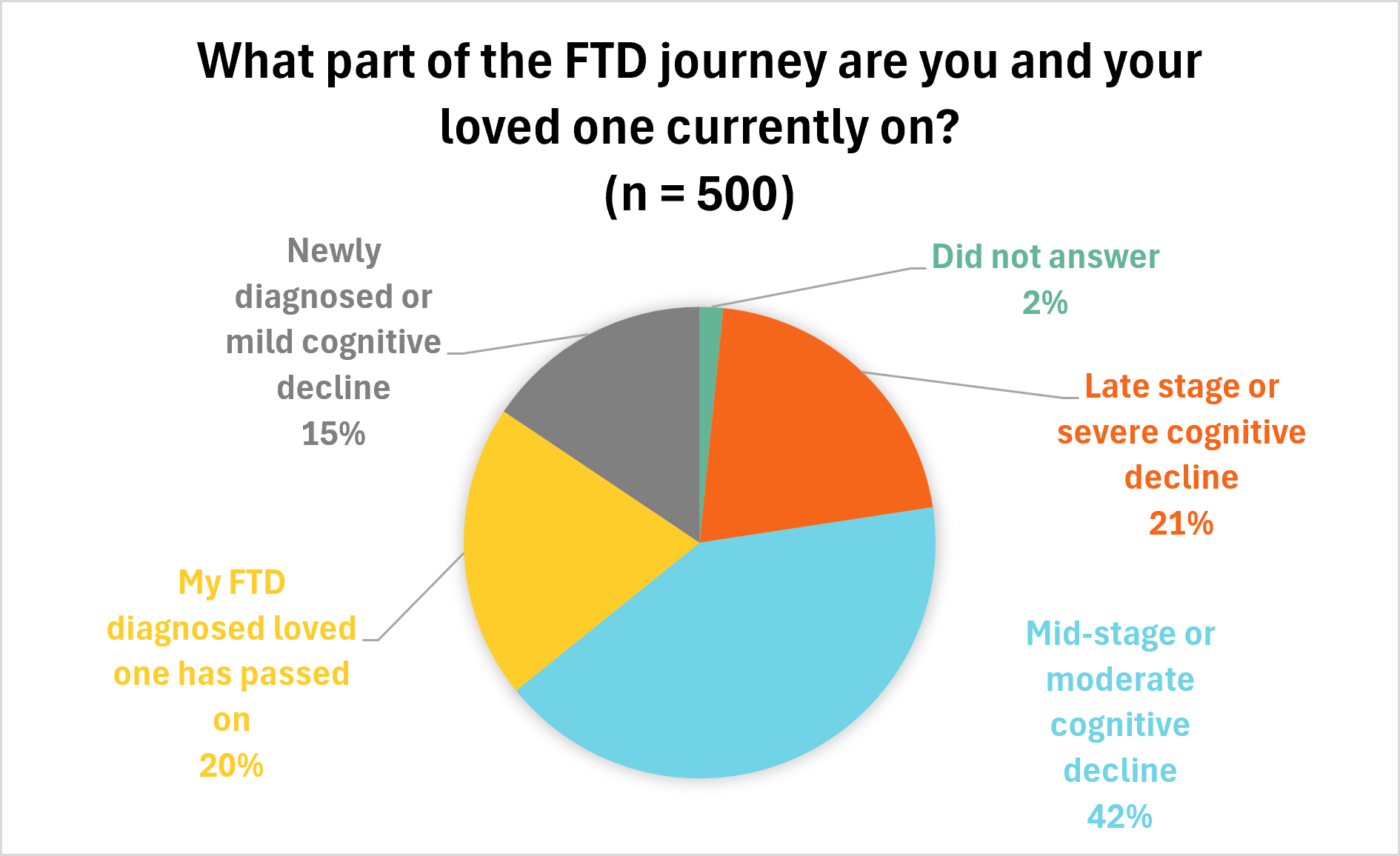
We received input on this Quick Question from all stages of the FTD journey. The largest groups were those in the middle stages of FTD (42%) and those in the late stage of FTD (21%). We also received input from those whose FTD-diagnosed loved one had already passed away (20%), and those newly diagnosed (5%). 8 people did not answer.
The majority of respondents to this Quick Question were female (63%). 36% were male. Six people did not identify their gender. One person identified as non-binary. Answers came from around world with respondents reporting in from 18 countries, including 45 states plus Washington, DC and Puerto Rico, and five Canadian provinces.
Together we can find a cure for ftd
The FTD Disorders Registry is a powerful tool in the movement to create therapies and find a cure. Together we can help change the course of the disease and put an end to FTD.

Your privacy is important! We promise to protect it. We will not share your contact information.