


PRESS & NEWS
Quick Question May 2026 Result:
A total of 496 people responded. Responses showed that healthcare interactions are a regular part of life for many in the FTD community.
In the FTD Disorders Registry’s May Quick Question, we asked participants: “How often do you interact with the healthcare system due to FTD-related needs?” A total of 496 people responded. Understanding how frequently individuals and families engage with healthcare providers can help paint a clearer picture of the ongoing impact of FTD and the level of support many people require throughout their journey.
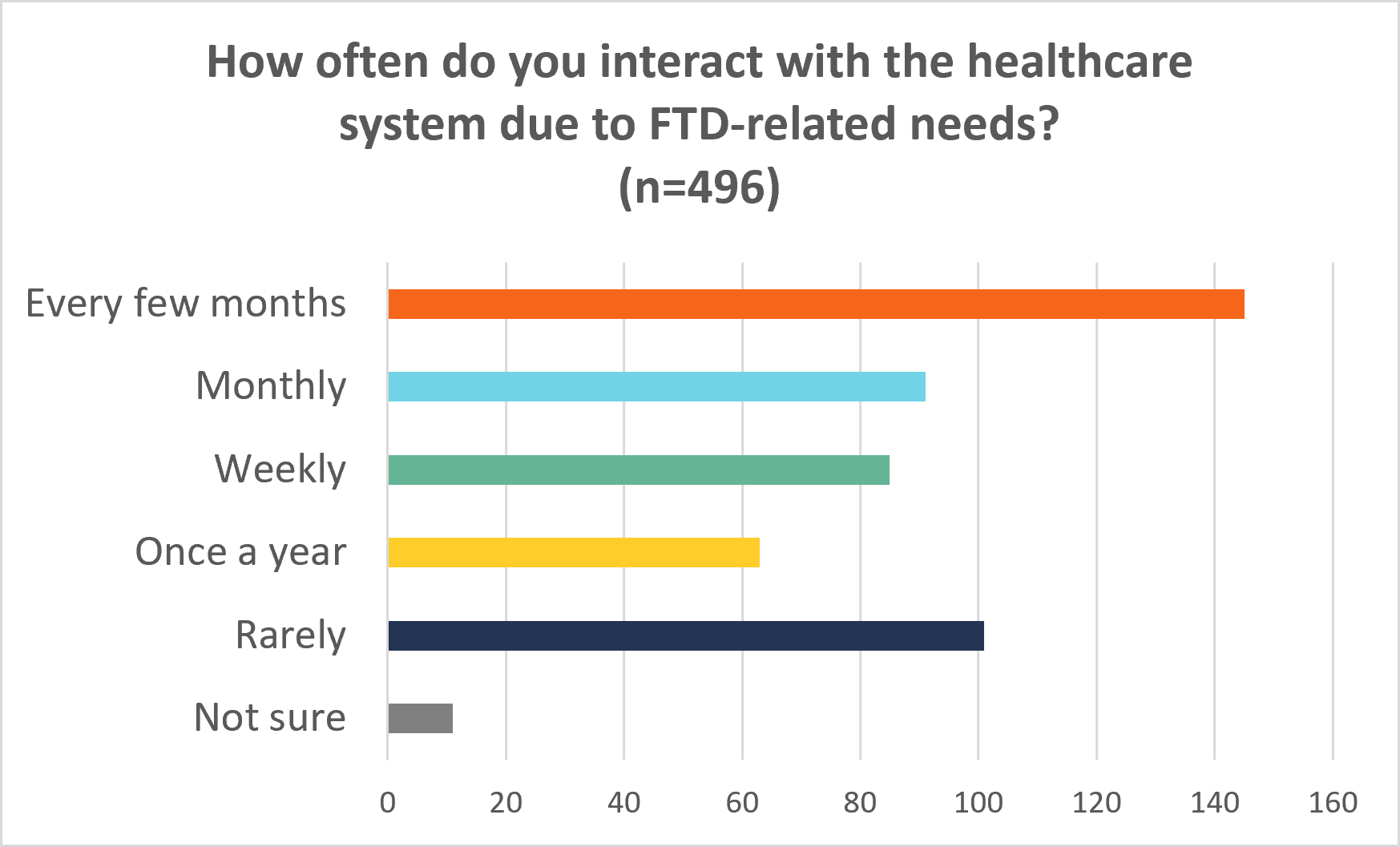
Responses showed that healthcare interactions are a regular part of life for many in the FTD community. Nearly one-third of respondents (29.2%) reported interacting with the healthcare system every few months, making it the most common response. Another 20.4% said they do so rarely, while 18.3% reported interacting monthly and 17.1% weekly. Smaller percentages indicated they interact with the healthcare system once a year (12.7%) or were not sure (2.2%) how often those interactions occur.
The results highlight that FTD often requires ongoing engagement with healthcare providers, whether through routine appointments, specialist visits, therapies, or care coordination. While experiences vary across individuals and families, the findings underscore the significant role healthcare systems play in supporting people impacted by FTD.
Demographics
Among respondents, the largest group was spouses answering on behalf of a person diagnosed with FTD (44.75%). We also had strong representation from persons diagnosed with FTD answering for themselves (25%) and biological family members answering on behalf of a person diagnosed with FTD (12.5%). In addition, 4.43% were biological family members answering for themselves, 3.22% were caregivers answering on behalf of the person diagnosed with FTD, 3.18% were spouses answering for themselves, and 3% were individuals carrying a gene associated with FTD with no symptoms. A small number of respondents identified as other (2%), caregivers answering for themselves (less than 1%), a friend or a non-biological family member answering on behalf of an FTD diagnosed person (less than 1%).
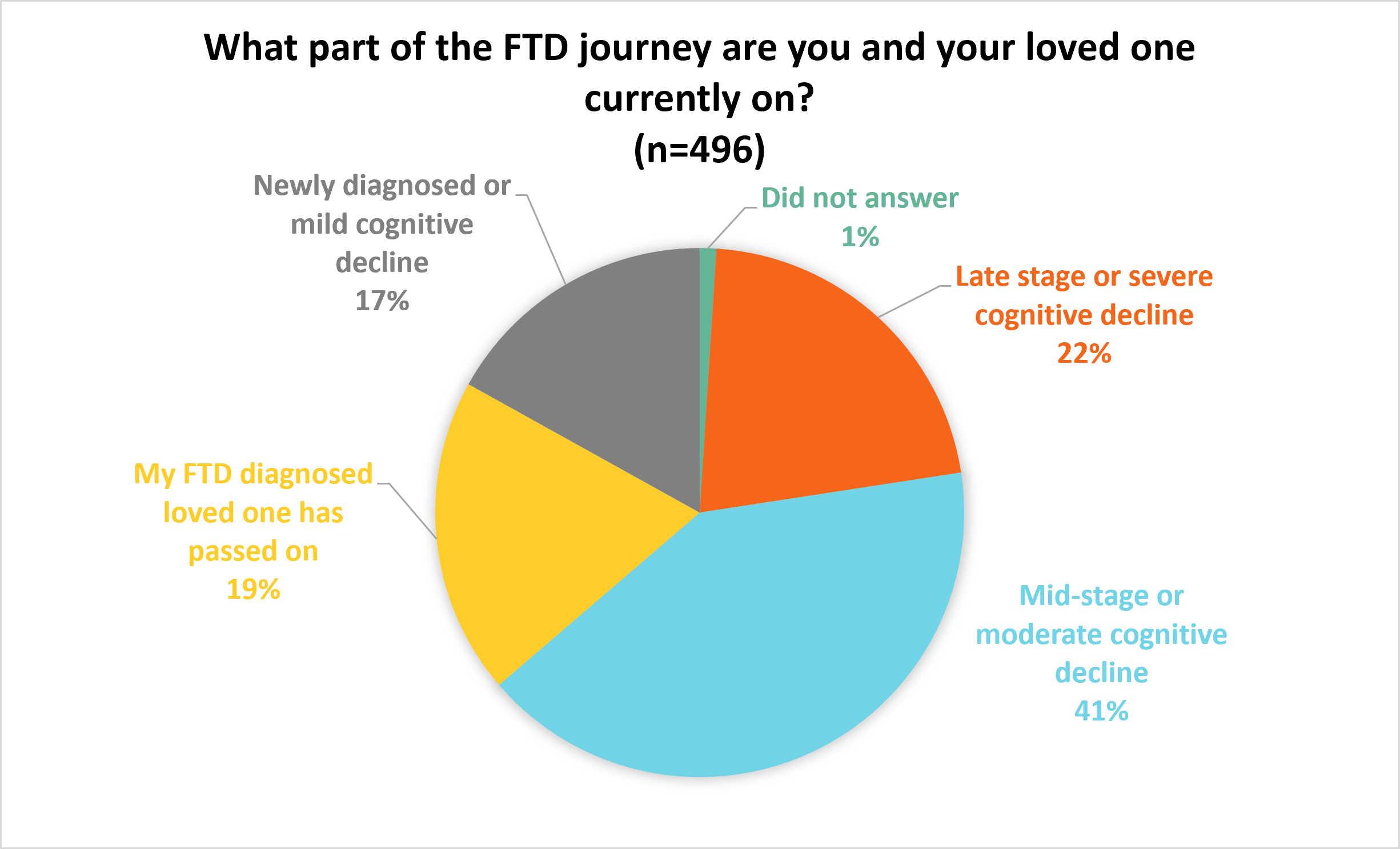
We received input on this Quick Question from all stages of the FTD journey. The largest groups were those in the middle stages of FTD (41%) and those in the late stage of FTD (22%). We also received input from those whose FTD-diagnosed loved one had already passed away (19%), and those newly diagnosed (17%). 4 people did not answer.
The majority of respondents to this Quick Question were female (65%). 35% were male. 1 person identified as non-binary, and two people did not identify their gender. Answers came from around world with respondents reporting in from 22 countries, including 43 states and Puerto Rico, plus seven Canadian provinces.
Together we can find a cure for ftd
The FTD Disorders Registry is a powerful tool in the movement to create therapies and find a cure. Together we can help change the course of the disease and put an end to FTD.

Your privacy is important! We promise to protect it. We will not share your contact information.