


PRESS & NEWS
Quick Question November 2025 Result:
353 people responded, sharing insights on the physical challenges that can come with FTD.
How has FTD affected physical abilities such as walking, balance, or coordination?
In the FTD Disorders Registry November Quick Question, we asked how FTD has affected physical abilities such as walking, balance, or coordination. 353 people responded, sharing insights on the physical challenges that can come with FTD.
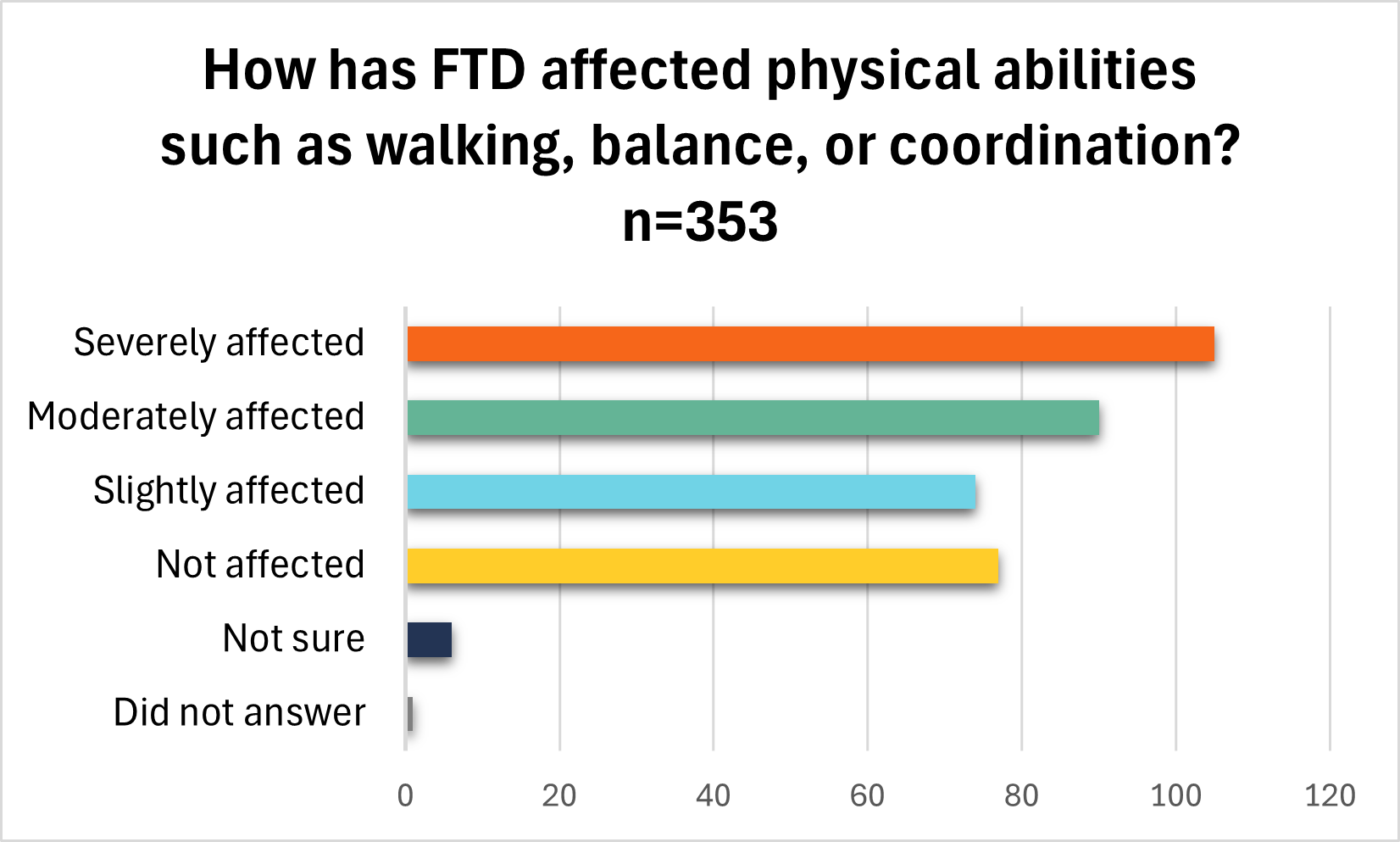
In response to the question, “How has FTD affected physical abilities such as walking, balance, or coordination?” the highest responses reflected substantial challenges: 29.7% of participants reported being severely affected, and 25.5% reported moderate difficulties. Others noted milder or no changes, with 21.0% reporting slight effects and 21.8% saying they were not affected. These results show that for many respondents, declines in physical abilities are a significant part of the condition.
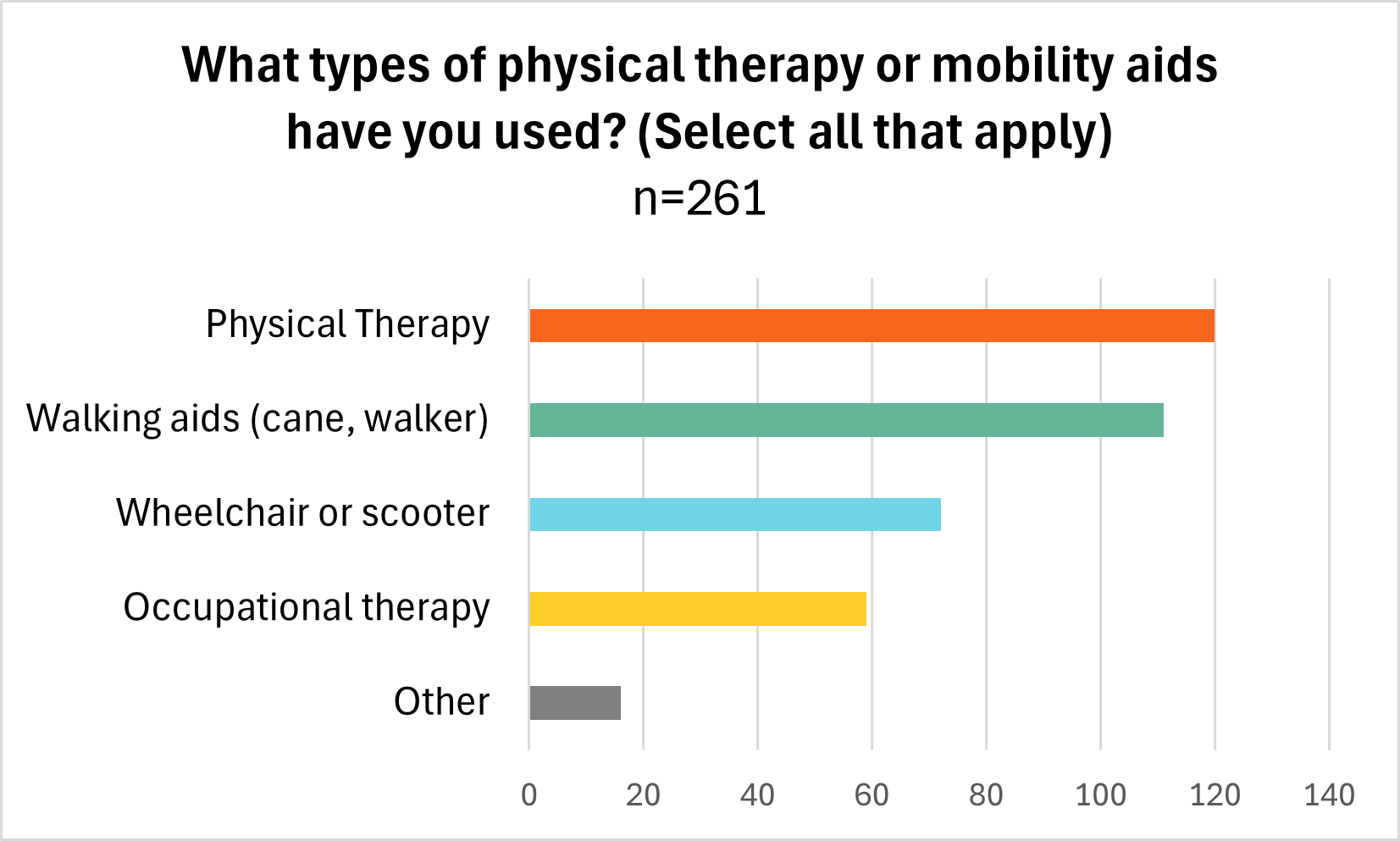
Eighty percent of respondents reported using some form of physical therapy or mobility aid. Among those who reported using physical therapy or mobility aids, 42.5% used physical therapy, and 39.3% relied on walking aids such as canes or walkers. 25.5% used a wheelchair or scooter, while 20.9% participated in occupational therapy. A smaller portion, 5.7%, shared that they have used other tools or therapies. These responses highlight the range of supports people use to manage physical changes associated with FTD.
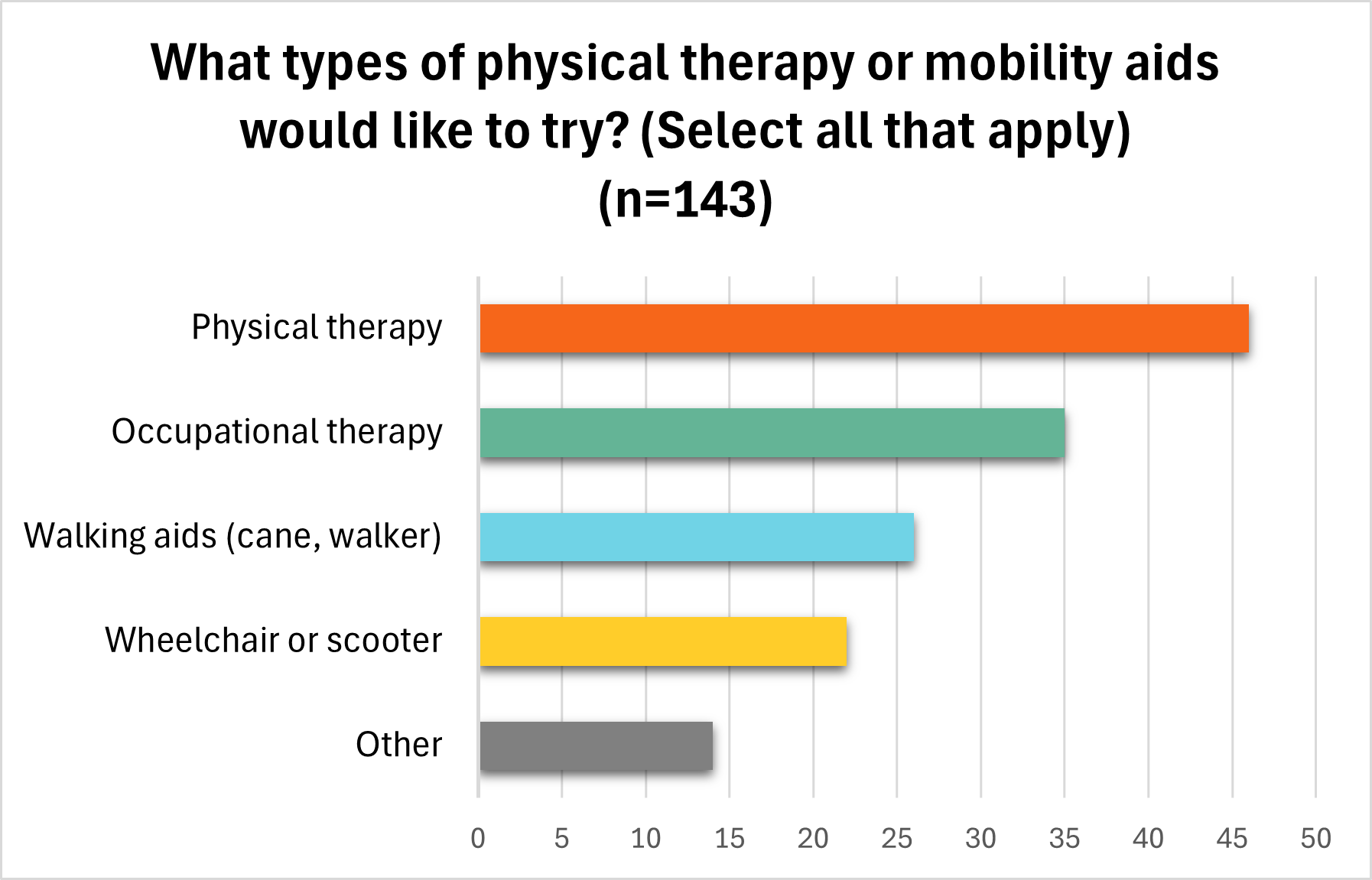
Among respondents, 47% said they did not want to try any additional physical therapies or mobility aids. Among those who did express interest, 32.2% said they would like to try physical therapy, 24.5% were interested in occupational therapy, 18.2% in walking aids such as canes or walkers, and 15.4% in a wheelchair or scooter. A smaller group (9.8%) selected other. These responses suggest that while nearly half feel no additional supports are needed, others remain open to exploring new tools or therapies.
Demographics
Among respondents, the largest group were spouses answering on behalf of a person diagnosed with FTD (44%). We also had strong representation from people diagnosed with FTD answering for themselves (27%) and from biological family members answering on behalf of a person diagnosed with FTD (21%). In addition, 3% were biological family members answering for themselves, 3% were caregivers answering on behalf of a person diagnosed with FTD. A small number of respondents identified as caregivers answering for themselves (less than 1%), a spouse answering for themselves (less than 1%) or a friend answering for themselves (less than 1%).
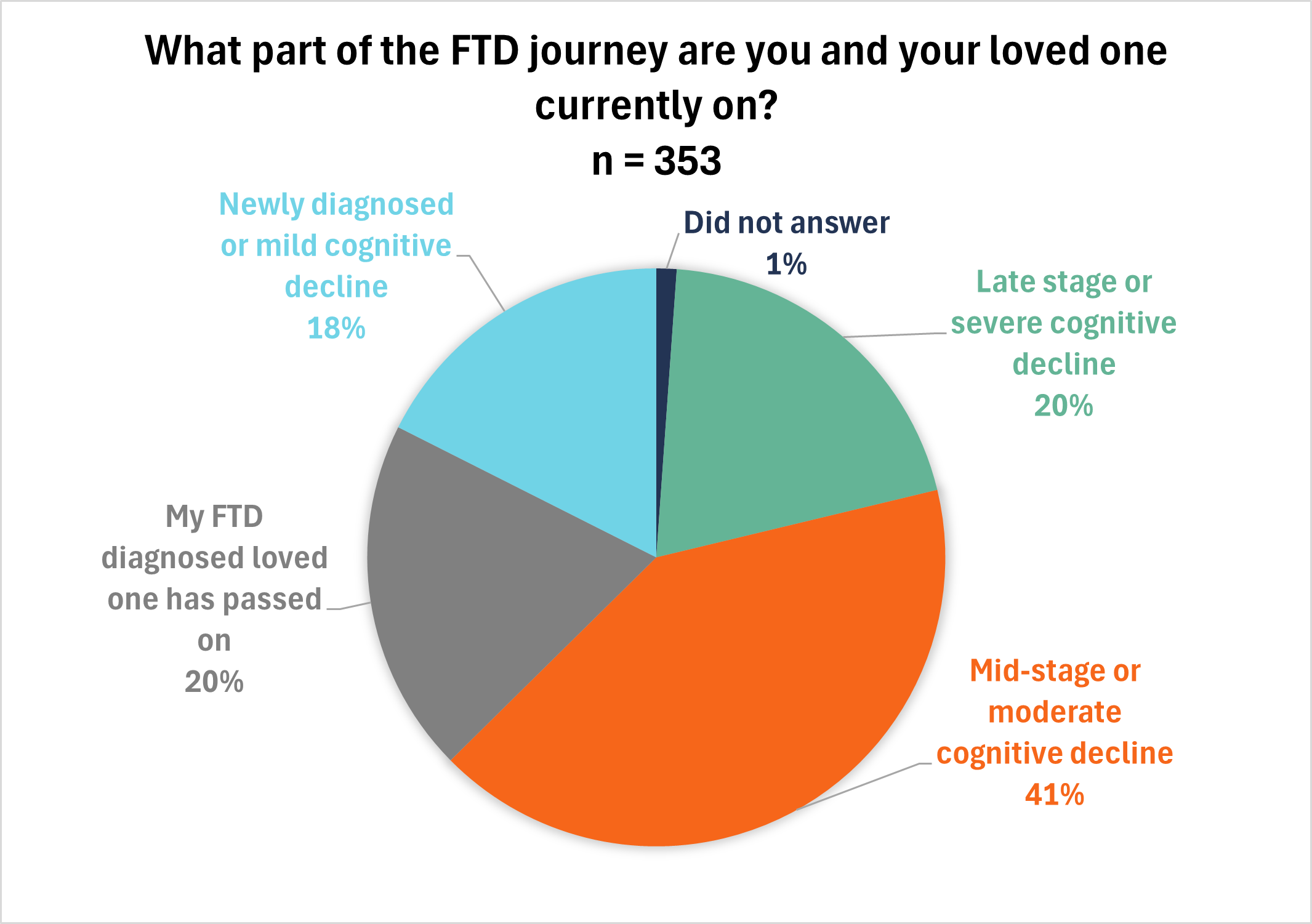
We received input on this Quick Question from all stages of the FTD journey. The largest group were those in the middle stages of FTD (41%), but we also received input from those whose FTD-diagnosed loved one had already passed away (20%), those in the late-stage of FTD (20%), and those newly diagnosed (18%).
The majority of respondents to this Quick Question were female (62%). 36% were male. Five people did not identify their gender. Answers came from around world with respondents reporting in from 21 countries, including 44 states and the District of Columbia, and nine Canadian provinces.
Together we can find a cure for ftd
The FTD Disorders Registry is a powerful tool in the movement to create therapies and find a cure. Together we can help change the course of the disease and put an end to FTD.

Your privacy is important! We promise to protect it. We will not share your contact information.