


PRESS & NEWS
Quick Question October 2025 Result:

About 33% reported that they are actively exploring care options ...
Have you considered long-term care options for the person with FTD?
In October’s Quick Question, we asked whether families have considered long-term care options for the person with FTD, including memory care, assisted living, or skilled nursing. 383 people responded, providing meaningful insight into how care planning varies across disease stage, support resources, and family needs.

In response to our question about considering long-term care options, experiences varied widely across the community. About 33% reported that they are actively exploring care options such as memory care, assisted living, or skilled nursing, while 11% have thought about long-term care but aren’t sure where to begin. Nearly 29% said they have not yet considered these options, and 24% shared that they do not plan to pursue long-term care. A small percentage (3%) did not answer. These results reflect the complexity of care planning in FTD where timing, resources, disease progression, and personal values all shape when and how these conversations unfold.
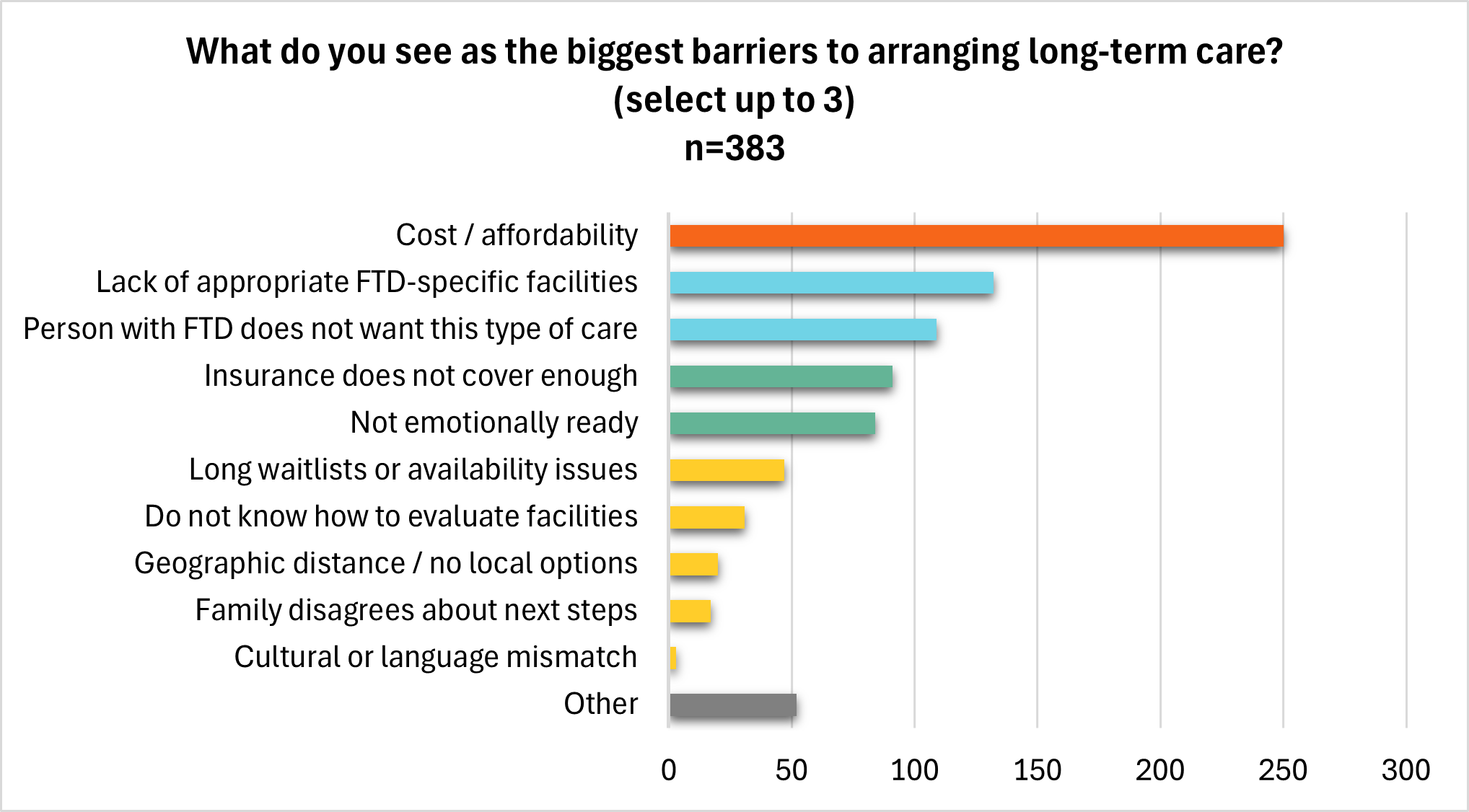
When we asked about the biggest barriers to arranging long-term care, cost and affordability emerged as the most common challenge, selected by about 65% of respondents. Many also noted the lack of facilities equipped to support people specifically living with FTD (35%), and the reality that the person with FTD does not want this type of care (29%). Emotional readiness remains a significant factor as well, with about 22% sharing that they are not yet ready to consider long-term placement. Concerns about insurance coverage (24%) and long waitlists (12%) also play a role, while smaller numbers pointed to uncertainty about how to evaluate care options (8%), limited local availability (5%), or family disagreements (4%).
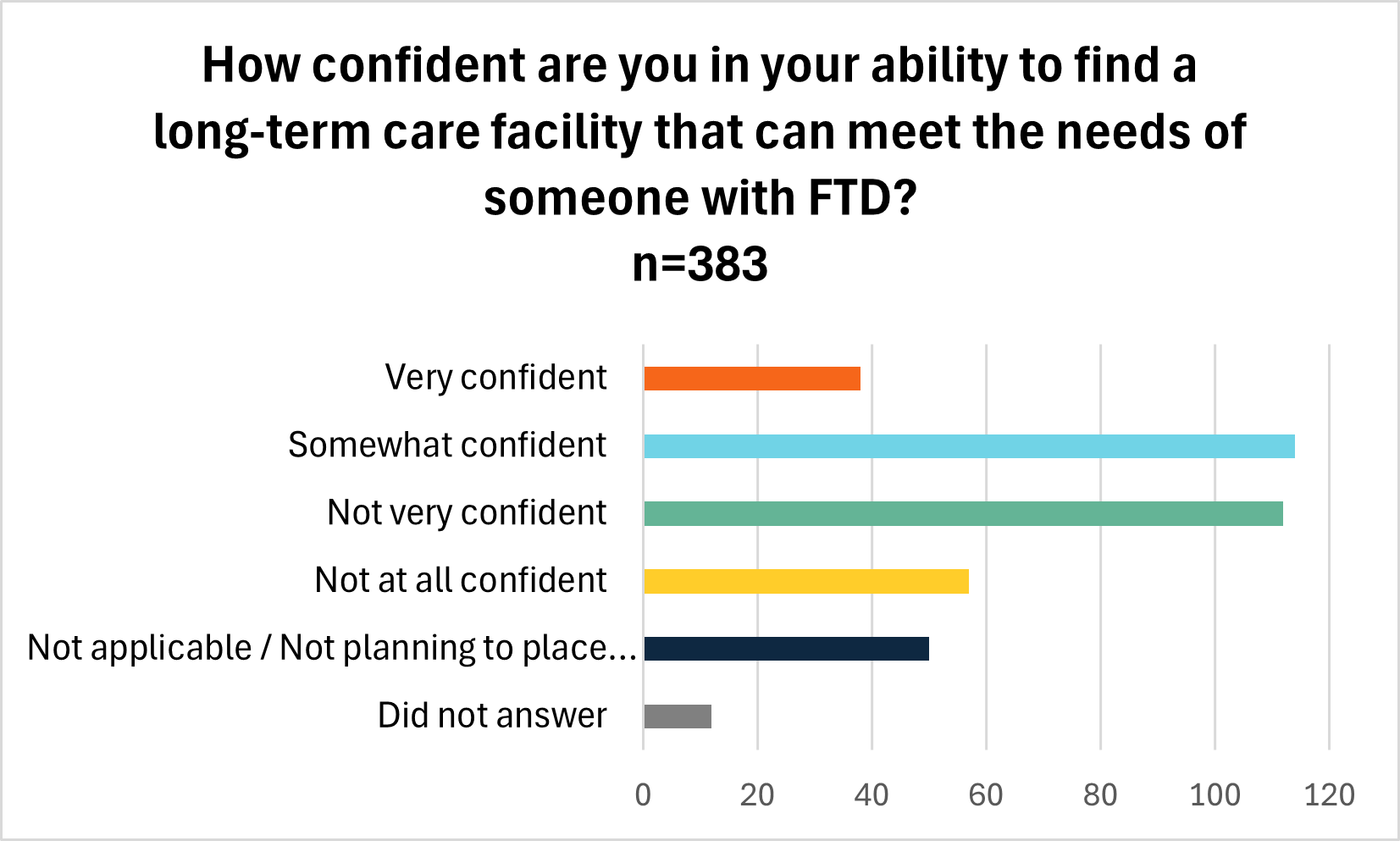
When asked how confident they feel in finding a long-term care facility that can meet the needs of someone with FTD, responses showed a significant level of uncertainty. Nearly 30% said they are not very confident, and about 15% reported being not at all confident. Another 30% described themselves as somewhat confident, while only 10% felt very confident in their ability to identify an appropriate facility. For 13% of respondents, this question did not apply because they are not planning to pursue long-term care. Overall, the results underscore the difficulty families face in locating care settings equipped to support the unique behavioral, cognitive, and communication needs associated with FTD.
Demographics
Among respondents, the largest group were spouses answering on behalf of a person diagnosed with FTD (46%). We also had strong representation from people diagnosed with FTD answering for themselves (24%) and from biological family members answering on behalf of a person diagnosed with FTD (15%). In addition, 5% were biological family members answering for themselves, 4% were spouses answering for themselves, and 2% were caregivers answering on behalf of a person diagnosed with FTD. A small number of respondents identified as caregivers answering for themselves (1%) or friends responding on behalf of someone with FTD (1%).
We received input on this Quick Question from all stages of the FTD journey. The largest group were those in the middle stages of FTD (41%), but we also received input from those whose FTD-diagnosed loved one had already passed away (16%), those in the late-stage of FTD (22%), and those newly diagnosed (19%).
The majority of respondents to this Quick Question were female (63%). 35% were male. Eight people did not identify their gender. Answers came from around world with respondents reporting in from 20 countries, including 43 states and the District of Columbia.
Overall, these results point to a clear need for more FTD-informed care options, better guidance for families, and support in navigating decisions that are often both practical and deeply emotional.
Together we can find a cure for ftd
The FTD Disorders Registry is a powerful tool in the movement to create therapies and find a cure. Together we can help change the course of the disease and put an end to FTD.

Your privacy is important! We promise to protect it. We will not share your contact information.