


PRESS & NEWS
Quick Question October 2026 Result:
A total of 559 people responded, sharing insights into how they monitor changes throughout the FTD journey. Most respondents reported tracking symptoms or progression over time ...
Tracking symptoms and changes over time can help people and families impacted by frontotemporal degeneration (FTD) better understand how the disease is progressing. It can also provide valuable information to healthcare providers and researchers. In our October Quick Question, we asked Registry participants, “Do you track symptoms or progression over time?” A total of 559 people responded, sharing insights into how they monitor changes throughout the FTD journey.
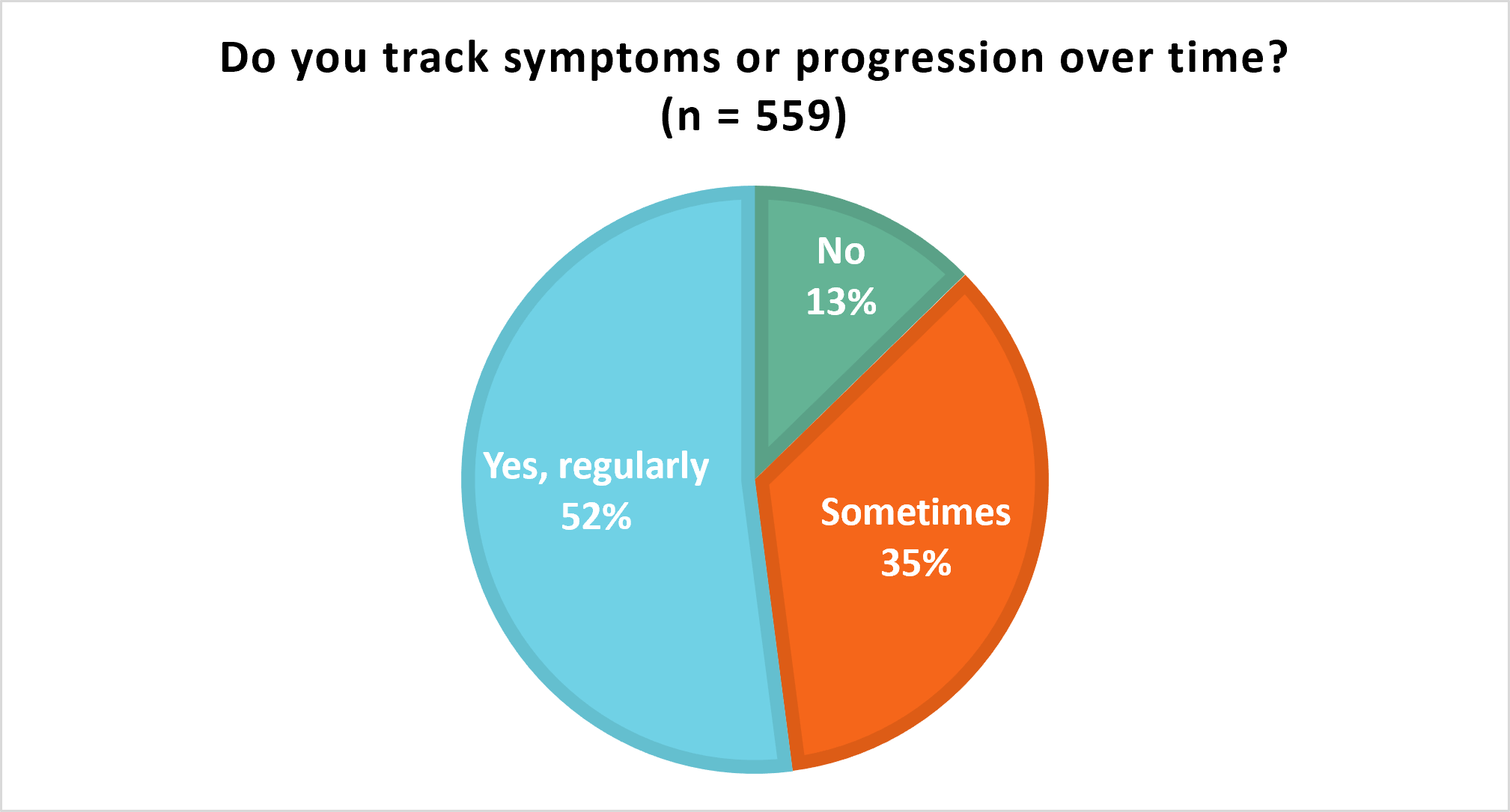
Most respondents reported tracking symptoms or progression over time, with 52% saying they do so regularly and 35% tracking changes sometimes. Just 13% said they do not track symptoms or progression.
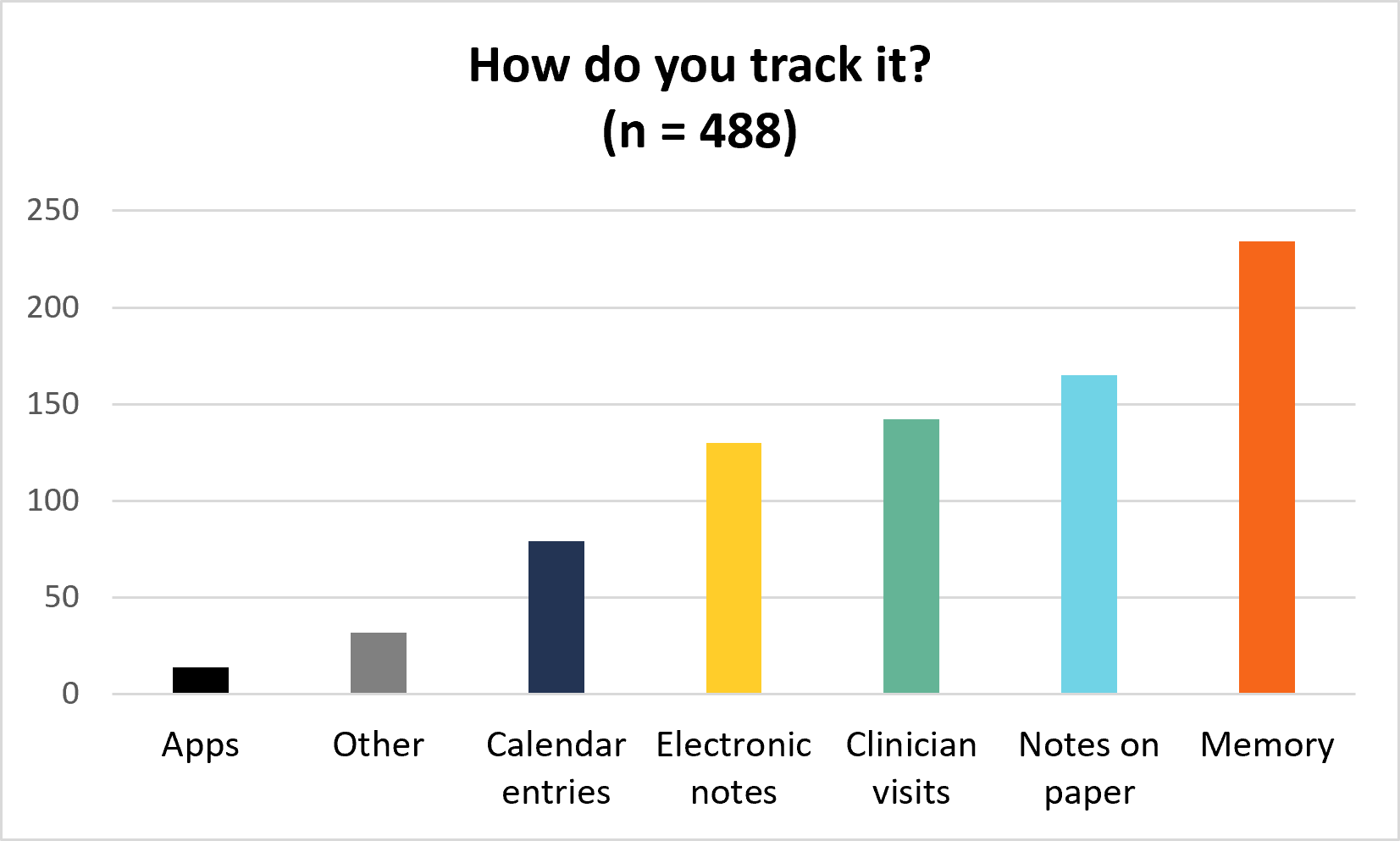
Among respondents who said they track symptoms or progression either sometimes or regularly, the most common method was relying on memory (48%). Others reported using handwritten notes (34%), clinician visits (29%), electronic notes (27%), and calendar entries (16%). A smaller percentage used apps (3%) or other methods (7%). Respondents could select more than one method.
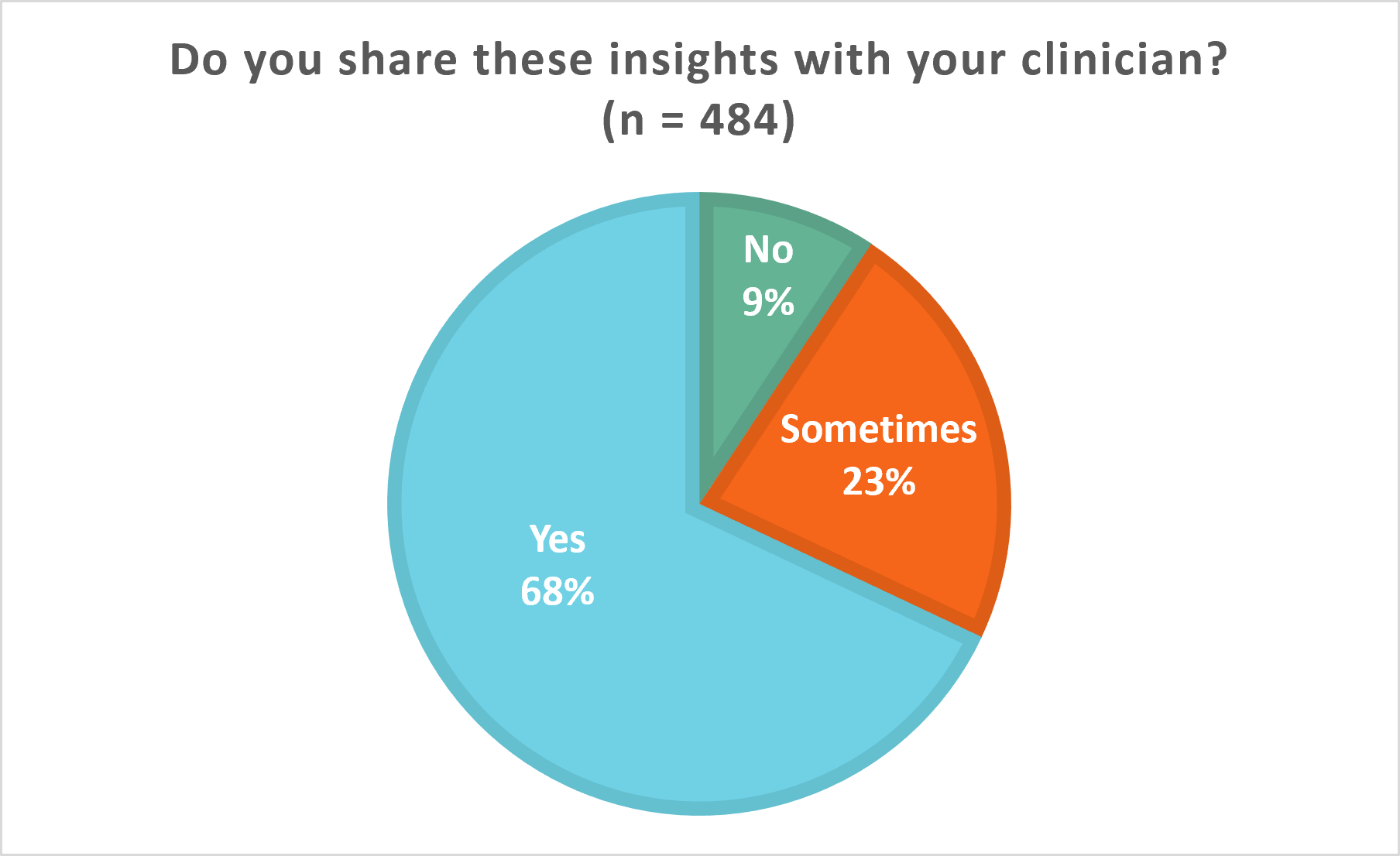
When asked whether they share these insights with their clinician, 68% of respondents said they do, while 23% said they sometimes share the information. Just 9% reported that they do not share their observations with their clinician.
These responses highlight the important role that tracking symptoms and progression can play in understanding the FTD journey. While many respondents rely on memory rather than formal tracking tools, most share their observations with clinicians. Finding simple, consistent ways to document changes over time may help individuals and families communicate more effectively with their healthcare teams and provide a clearer picture of how symptoms evolve.
Demographics
Respondents represented a range of roles and experiences within the FTD community. The largest group was spouses answering on behalf of a person diagnosed with FTD (46.87%), followed by people diagnosed with FTD answering for themselves (21.82%) and biological family members answering on behalf of a person diagnosed (15.92%). Other respondents included spouses answering for themselves (4.47%), biological family members answering for themselves (3.76%), individuals carrying a genetic variant associated with FTD who are not currently experiencing symptoms (3.22%), and care partners answering on behalf of a diagnosed person (2.33%). Smaller groups included care partners answering for themselves (0.36%), friends answering on behalf of a diagnosed person (0.36%), friends answering for themselves (0.18%), and non-biological family members (0.18%). An additional 0.54% selected “Other.”
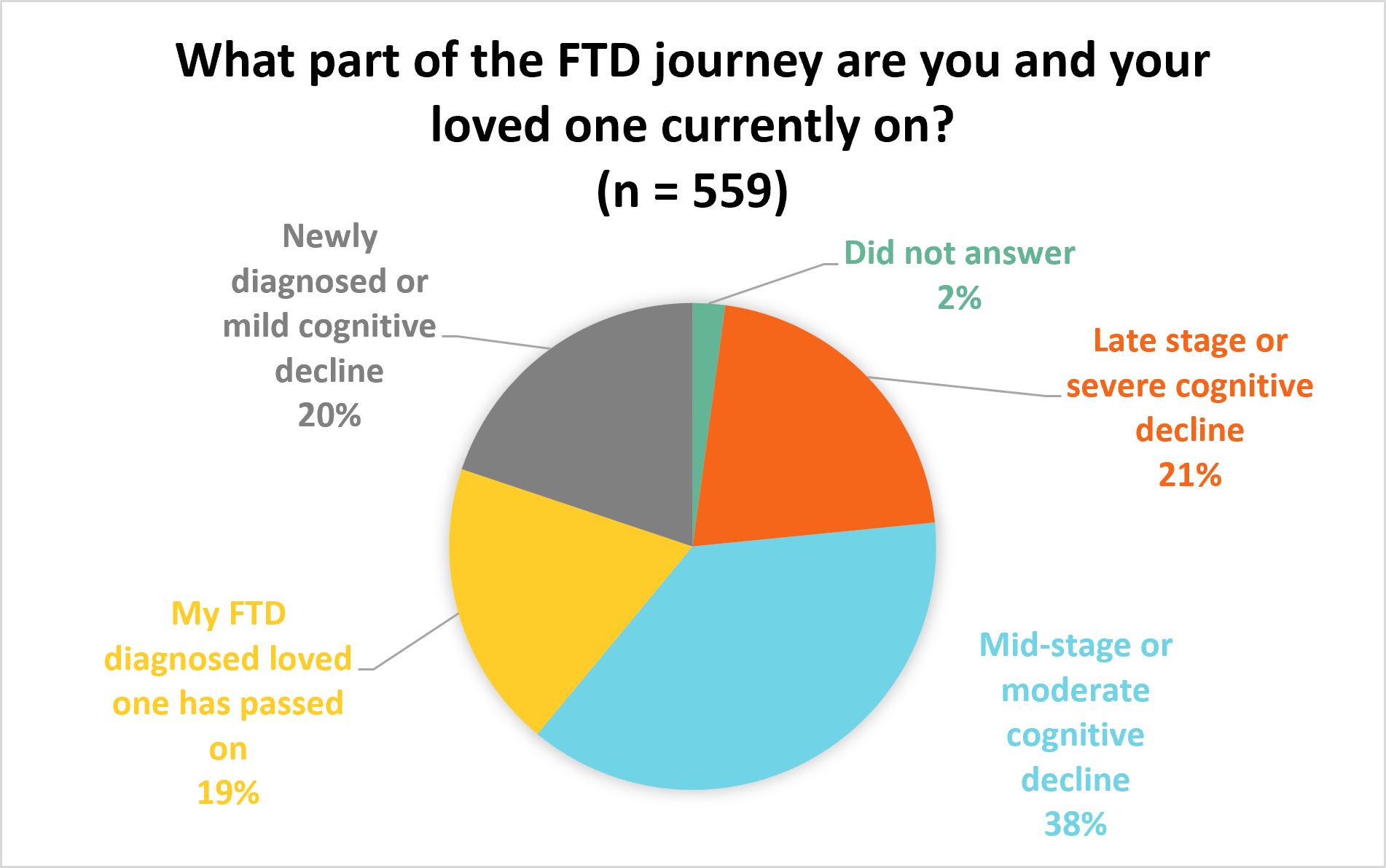
Respondents also represented different stages of the FTD journey. The largest group reported being in the mid-stage or experiencing moderate cognitive decline (37.57%), followed by those in the late stage or experiencing severe cognitive decline (21.29%). Another 19.86% reported being newly diagnosed or experiencing mild cognitive decline, while 19.14% indicated that their loved one diagnosed with FTD had passed away. 12 people did not answer this question.
The majority of respondents identified as female (62.61%), while 36.14% identified as male and 0.18% as non-binary. 6 people did not answer the question about gender.
Respondents also represented a broad geographic range, with participants from 24 countries, including 45 U.S. states and nine Canadian provinces. This geographic diversity helps provide a wider perspective on how individuals and families impacted by FTD experience and manage symptoms and progression over time.
Together we can find a cure for ftd
The FTD Disorders Registry is a powerful tool in the movement to create therapies and find a cure. Together we can help change the course of the disease and put an end to FTD.

Your privacy is important! We promise to protect it. We will not share your contact information.