


PRESS & NEWS
Reading The Vanishing Family? What You Should Know About FTD
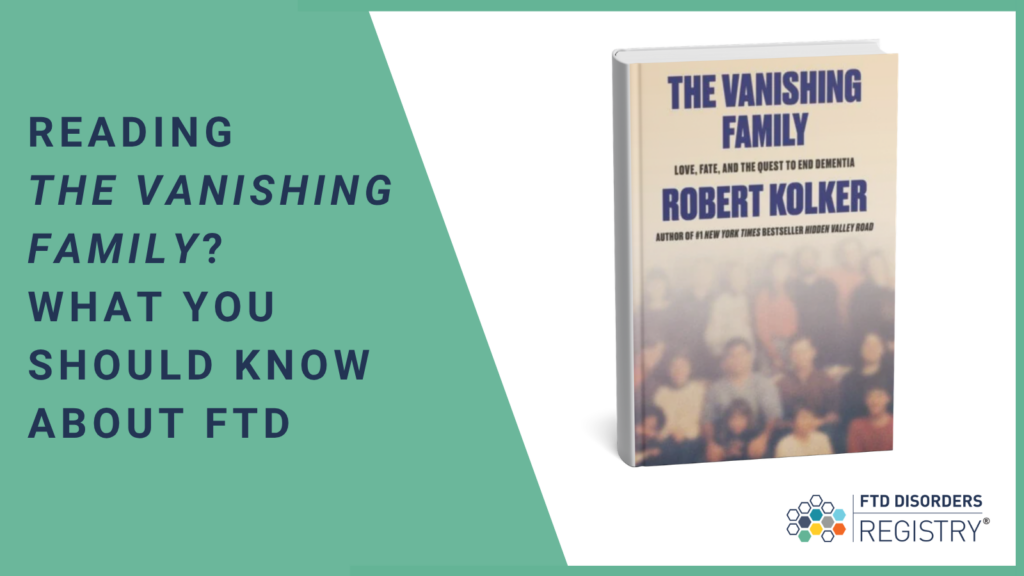
Discover important facts about frontotemporal degeneration (FTD), including its genetic and sporadic forms, inherited risk, genetic testing and counseling, and how the FTD Disorders Registry connects individuals and families to research opportunities, regardless of whether they know their genetic status.
 Robert Kolker’s The Vanishing Family: Love, Fate, and the Quest to End Dementia introduces readers to a family impacted by an inherited form of frontotemporal degeneration (FTD). Through their experiences, the book explores the complexities of genetic disease, the difficult decisions families face, and the potential of scientific research to change the future for generations to come.
For many readers, this may be their first introduction to FTD. For others, particularly those with a family history of the disease, the story may feel deeply personal.
While the book highlights one family's experience with genetic FTD, there are several important things to understand about the disease, its genetics, and the research underway to better understand and treat it.
Not All Cases of FTD Are Inherited
While genetics is central to the story told in The Vanishing Family, most people diagnosed with FTD do not have an identifiable genetic cause for their disease.
Approximately 20% of people diagnosed with FTD have an identifiable disease-causing genetic variant. The majority of cases are considered sporadic, meaning they occur without a known inherited cause.
Having a family member diagnosed with FTD does not necessarily mean that you or other members of your family will develop the disease. However, an absence of known family history does not rule out a genetic cause.
There Are Multiple Genetic Causes of FTD
The family featured in The Vanishing Family is impacted by a variant in the MAPT gene. MAPT is one of several genes associated with FTD.
The three most common genetic causes of FTD involve:
- MAPT: A gene that provides instructions for making the tau protein.
- GRN: A gene that provides instructions for making the progranulin protein.
- C9orf72: A gene associated with both FTD and amyotrophic lateral sclerosis (ALS).
Other, less common genetic causes of FTD have also been identified. Understanding these genetic differences can help researchers investigate disease mechanisms and develop more targeted approaches to treatment.
Understanding Inherited Risk
When a parent carries an FTD-causing genetic variant in one of the most common FTD-associated genes, each biological child has a 50% chance of inheriting that variant.
It is important to understand that this is the chance of inheriting the variant, not necessarily the chance of developing symptoms. The likelihood of developing disease, the age at which symptoms may begin, and the way symptoms present can vary depending on the gene and specific variant.
Even within the same family, individuals may experience FTD differently.
Genetic Counseling and Genetic Testing Are Not the Same
One of the difficult decisions explored in The Vanishing Family is whether to learn one's genetic status.
Genetic counseling can help individuals and families understand their potential genetic risk, explore testing options, and consider the medical, emotional, financial, and personal implications of learning their genetic status.
Meeting with a genetic counselor does not mean that you have to pursue genetic testing.
The Association for Frontotemporal Degeneration (AFTD) recommends that everyone diagnosed with FTD be offered genetic counseling and the option of genetic testing, regardless of their known family history.
For biological family members who have not developed symptoms, the decision to pursue genetic testing is deeply personal and is best made with the guidance of a qualified genetics professional.
FTD Is More Than a Disease of Memory
FTD encompasses a group of progressive neurological disorders that primarily affect the frontal and temporal lobes of the brain.
Unlike some other forms of dementia, early symptoms of FTD may include changes in personality, behavior, judgment, decision-making, language, or movement rather than memory loss.
FTD also frequently affects people during their working years, when they may be raising families, building careers, or caring for aging parents.
The experiences of people impacted by FTD can vary significantly, highlighting the importance of research across the full spectrum of FTD disorders.
You Do Not Need to Know Your Genetic Status to Contribute to FTD Research
Biological family members have an important role in advancing FTD research, even if they have not developed symptoms, have not undergone genetic testing, or have chosen not to learn their genetic status.
Depending on the study, researchers may be interested in learning from:
- Individuals with a confirmed FTD-causing genetic variant.
- Individuals who may be at risk for genetic FTD.
- Biological family members who do not know their genetic status.
- Biological family members who have tested negative for a known familial variant.
- Individuals with sporadic forms of FTD.
- Care partners.
These different perspectives can help researchers better understand how FTD develops, identify the earliest signs of disease, investigate why experiences differ among individuals, and evaluate potential approaches to treatment and prevention.
The FTD Disorders Registry Connects People to Research
The FTD Disorders Registry was established to help connect people impacted by frontotemporal degeneration with research opportunities and to provide researchers with valuable information that can advance scientific understanding of these disorders.
People diagnosed with FTD, biological family members, caregivers, and others with a connection to FTD can join the Registry to stay informed about research opportunities relevant to their interests.
Eligible participants can also contribute directly to research through the FTD Disorders Registry Research Study. Participation may include completing surveys, sharing genetic test results, and linking medical records.
For genetic families, the Registry provides a way to stay informed about emerging research opportunities, including observational studies and clinical trials focused on specific genetic forms of FTD.
You do not need an FTD diagnosis, a confirmed genetic variant, or knowledge of your genetic status to join the Registry.
Helping Change the Future of FTD
There are currently no approved treatments that cure or stop the progression of FTD. However, researchers are working to better understand the underlying causes of the disease, develop potential treatments, identify biomarkers, and explore whether intervention before symptoms begin may be possible.
The Vanishing Family brings national attention to the profound impact FTD can have across generations. It also highlights why continued investment in research and participation from people impacted by FTD are so important.
Whether your family has been impacted by genetic or sporadic FTD, whether you know your genetic status or not, and whether you are living with a diagnosis or caring for someone who is, your experiences can help move research forward.
Learn more about FTD research opportunities and how you can participate at FTDregistry.org.
Together we can find a cure for ftd
The FTD Disorders Registry is a powerful tool in the movement to create therapies and find a cure. Together we can help change the course of the disease and put an end to FTD.

Your privacy is important! We promise to protect it. We will not share your contact information.