


PRESS & NEWS
Stay Research Ready: Four Simple Ways to Support FTD Research
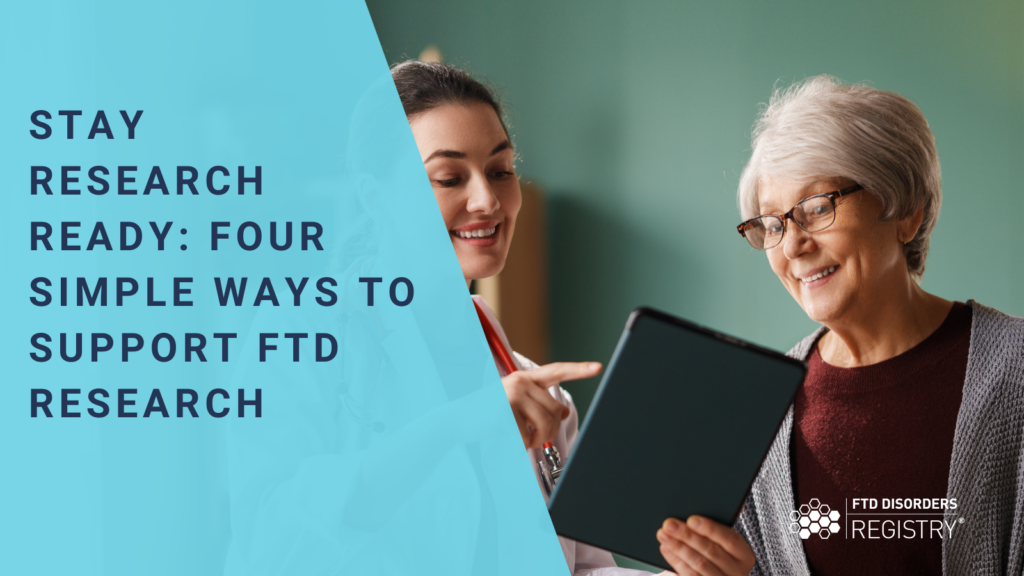
When you stay research ready, you help researchers understand that there is a strong, engaged, community eager to accelerate progress.
Because frontotemporal degeneration (FTD) is a rare disease, every person who joins the research community helps move the science forward.
Researchers are working urgently to better understand FTD and develop new treatments, but progress depends on having a strong, engaged group of individuals who are ready to participate when opportunities arise.
At the FTD Disorders Registry, we are dedicated to supporting a research-ready community.
What Does It Mean to Be Research Ready?
Being research ready means taking a few simple steps so that, if a study or clinical trial becomes available that matches your interests and circumstances, you are prepared to learn about it and decide whether participation is right for you.
It does not mean you are committing to join every study. It simply means you are staying informed and keeping your information current.
1. Join the FTD Disorders Registry
The FTD Disorders Registry is a secure online platform that connects people impacted by FTD with research opportunities.
Anyone with an interest in FTD research can join, including:
- People diagnosed with an FTD disorder
- Family members and care partners
- Friends and allies
- Healthcare professionals
- Researchers
By joining the Registry, you help demonstrate that the FTD community is engaged and ready to advance the science.
2. Participate in the Registry Research Study
Eligible Registry members may also choose to participate in the Registry Research Study through their Registry dashboard.
To take part, you must be an adult living in the United States or Canada and be one of the following:
- A person diagnosed with an FTD disorder
- A care partner to someone diagnosed with an FTD disorder
- A biological family member of someone diagnosed with an FTD disorder
- A legally authorized representative for someone diagnosed with an FTD disorder
This optional study allows participants to contribute additional information through surveys and, if they choose, share materials such as genetic testing reports, medical records, and autopsy reports.
These data help researchers better understand the real-world impact of FTD and design studies that address the community’s most pressing needs.
3. Keep Your Registry Profile Up to Date
Your circumstances and interests may change over time.
Take a few minutes to log in to your Registry dashboard and confirm that:
- Your email address is current
- Your research interests are up to date
- Your communication preferences reflect how you want to hear from us
Keeping your information current helps ensure you receive relevant research opportunities.
4. Learn About FTD Research and Clinical Trials
Understanding the research landscape can help you make informed decisions.
The FTD Disorders Registry regularly share updates on:
- Clinical trials
- Research studies
- Scientific discoveries
- Educational webinars
The more informed you are, the more confident you may feel when opportunities arise.
Your Privacy Is Protected
Protecting your privacy is a top priority.
The FTD Disorders Registry removes identifying information before sharing data with researchers. Your personal information is never shared, and you decide what information you choose to provide.
Every Participant Helps Move Research Forward
FTD research depends on people who are willing to be counted.
When you join the Registry, participate in the Research Study, and keep your information current, you help researchers understand that there is a strong, engaged, and research-ready community eager to accelerate progress.
Together we can find a cure for ftd
The FTD Disorders Registry is a powerful tool in the movement to create therapies and find a cure. Together we can help change the course of the disease and put an end to FTD.

Your privacy is important! We promise to protect it. We will not share your contact information.