


Press
Louder Than Words: CurePSP Helps People Preserve Their Voice

CurePSP’s Louder Than Words program provides free voice banking and AI voice cloning tools for people living with PSP, CBD, and MSA, helping individuals preserve their voice and stay connected with loved ones even if speech becomes difficult.
Read MoreFTD Is Not One Disease: Why Subtypes Matter for Research
FTD is a spectrum, not a single diagnosis. Recognizing the differences between subtypes helps researchers design smarter studies, accelerate discoveries, and move us closer to effective treatments.
Read MoreBeing Counted is an Act of Hope

Being counted is an act of hope, a way for individuals and families impacted by frontotemporal degeneration to turn their lived experience into momentum for research, visibility, and a future with better diagnosis, care, and treatments.
Read MoreWhy We Ask the Questions We Ask

Ever wonder why the Registry asks about finances or work life? Here’s how those questions help move FTD research forward.
Read MoreQuick Question January 2026 Result:

The highest response was access to specialists with FTD experience with 20.4%. There was also strong support for emotional or mental health support for patient and/or caregiver at 15.2% and …
Read MoreYou Joined. Now What? Five Small Ways to Stay Research Ready

You joined the FTD Disorders Registry. Now learn five simple ways to stay research ready and strengthen the future of FTD research.
Read MorePrevail Therapeutics PR006 Trial Discontinued
While the PR006 program has been discontinued, research into FTD continues. Here’s what this update means for the community and the path forward.
Read MoreWhat Makes a Registry “Research Ready”?
What does it really mean for an FTD registry to be research ready, and why does community participation matter so much?
Read MoreStrengthening FTD Research with CureGRN

Progress toward an FTD cure depends on communities and researchers working together.
Read MoreQuick Question December 2025 Result:
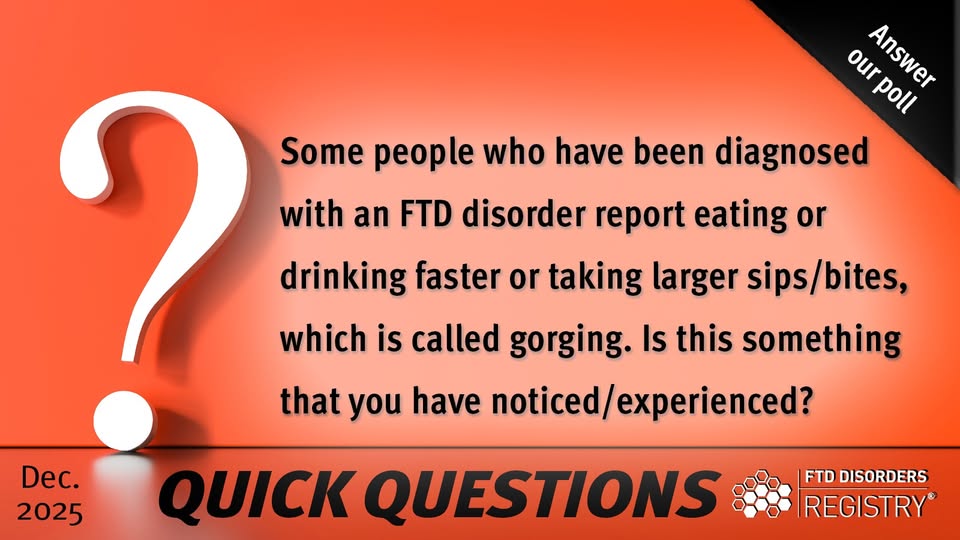
712 people responded and your responses are already helping us deepen scientific understanding of this symptom and will contribute directly to future research.
Read More