


NUMBERS HAVE POWER.
JOIN THE REGISTRY.
ADVANCE THE SCIENCE.
Together we can find a cure for ftd
The FTD Disorders Registry is a powerful tool in the movement to create therapies and find a cure. Together we can help change the course of the disease and put an end to FTD.


Your privacy is important! We promise to protect it. We will not share your contact information.
WHAT IS THE FTD DISORDERS REGISTRY?


The Registry is an online database that collects information from those affected by all types of frontotemporal degeneration (FTD):
Persons diagnosed, current and former caregivers, family, and friends can join. As a member of the Registry, you can help us advance the science and move faster toward finding treatments and cures. The first step is simple:
NUMBERS HAVE POWER.
JOIN THE REGISTRY.
ADVANCE THE SCIENCE.
NUMBERS HAVE POWER.
JOIN THE REGISTRY.
ADVANCE THE SCIENCE.
Together we can find a cure for ftd
The FTD Disorders Registry is a powerful tool in the movement to create therapies and find a cure. Together we can help change the course of the disease and put an end to FTD.
Your privacy is important! We promise to protect it. We will not share your contact information.
WHAT IS THE FTD DISORDERS REGISTRY?


The Registry is an online database that collects information from those affected by all types of frontotemporal degeneration (FTD):
Persons diagnosed, current and former caregivers, family, and friends can join. As a member of the Registry, you can help us advance the science and move faster toward finding treatments and cures. The first step is simple:
AND NOW WE WORK TOGETHER >
Will you join the community working to end FTD?
WHO CAN JOIN >
Anyone with a connection to FTD disorders and an interest in research is encouraged to join the Registry, including:
- people diagnosed with an FTD disorder
- biological family members
- spouses
- caregivers
- friends
- physicians
- and other healthcare professionals
UPDATES
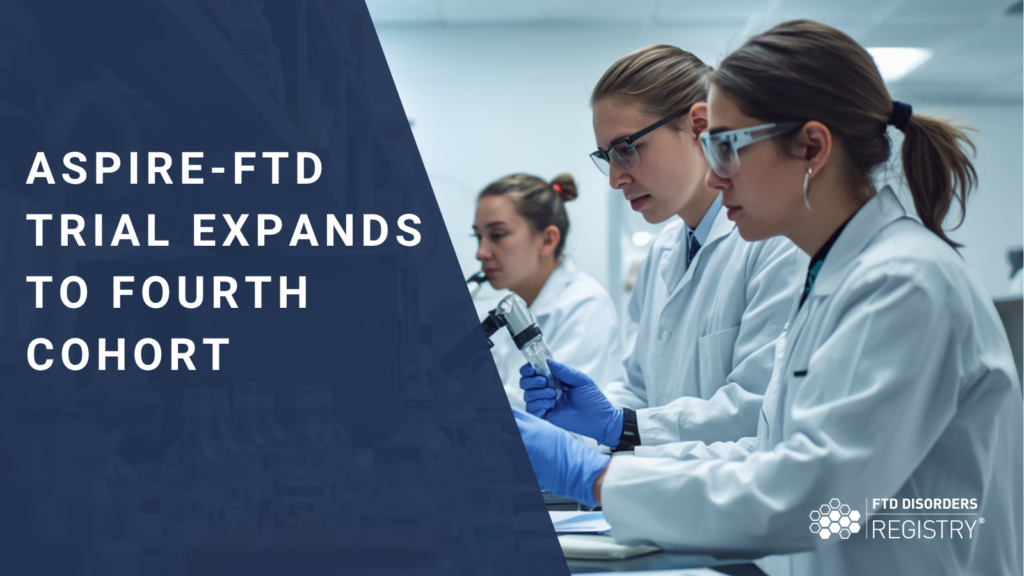
ASPIRE-FTD Trial Expands to Fourth Cohort
AviadoBio has expanded its ASPIRE-FTD clinical trial, creating new opportunities for people with GRN mutations to participate in gene therapy research.
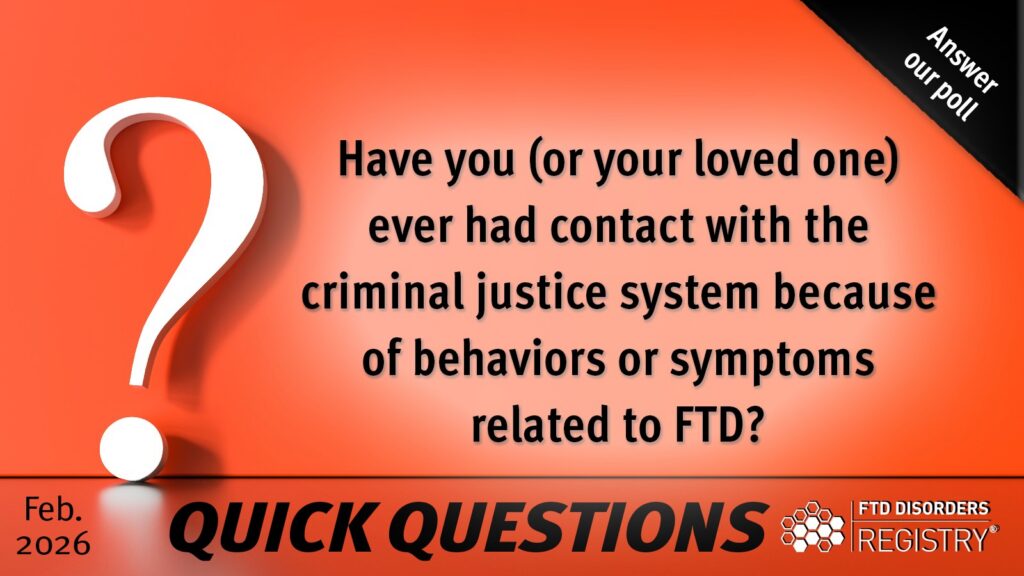
Quick Question February 2026 Result:
534 individuals responded, providing insight into how symptoms of FTD can sometimes intersect with law enforcement

What Care Partners Teach Researchers
Care partners play a vital role in helping researchers understand how the impact of FTD unfolds in daily life. Through their observations, experiences, and participation in the FTD Disorders Registry, care partners provide insights that shape future studies and ensure research reflects the real challenges families face.
What Care Partners Teach Researchers
Care partners play a vital role in helping researchers understand how the impact of FTD unfolds in daily life. Through their observations, experiences, and participation in the FTD Disorders Registry, care partners provide insights that shape future studies and ensure research reflects the real challenges families face.

Louder Than Words: CurePSP Helps People Preserve Their Voice
CurePSP’s Louder Than Words program provides free voice banking and AI voice cloning tools for people living with PSP, CBD, and MSA, helping individuals preserve their voice and stay connected with loved ones even if speech becomes difficult.
- « Previous
- 1
- 2
- 3
- 4
- Next »
ASPIRE-FTD Trial Expands to Fourth Cohort
AviadoBio has expanded its ASPIRE-FTD clinical trial, creating new opportunities for people with GRN mutations to participate in gene therapy research.
WAYS TO HELP
JOIN US TODAY
Be part of the community working to end FTD. Every voice counts.
PARTICIPATE IN RESEARCH
Support the science for an FTD cure. Sign up here.

SPREAD THE WORD
Invite family and friends to join the growing FTD Registry.


THE FTD REGISTRY IS A PARTNERSHIP OF: