


NUMBERS HAVE POWER.
JOIN THE REGISTRY.
ADVANCE THE SCIENCE.
Together we can find a cure for ftd
The FTD Disorders Registry is a powerful tool in the movement to create therapies and find a cure. Together we can help change the course of the disease and put an end to FTD.


Your privacy is important! We promise to protect it. We will not share your contact information.
WHAT IS THE FTD DISORDERS REGISTRY?


The Registry is an online database that collects information from those affected by all types of frontotemporal degeneration (FTD):
Persons diagnosed, current and former caregivers, family, and friends can join. As a member of the Registry, you can help us advance the science and move faster toward finding treatments and cures. The first step is simple:
NUMBERS HAVE POWER.
JOIN THE REGISTRY.
ADVANCE THE SCIENCE.
NUMBERS HAVE POWER.
JOIN THE REGISTRY.
ADVANCE THE SCIENCE.
Together we can find a cure for ftd
The FTD Disorders Registry is a powerful tool in the movement to create therapies and find a cure. Together we can help change the course of the disease and put an end to FTD.
Your privacy is important! We promise to protect it. We will not share your contact information.
WHAT IS THE FTD DISORDERS REGISTRY?


The Registry is an online database that collects information from those affected by all types of frontotemporal degeneration (FTD):
Persons diagnosed, current and former caregivers, family, and friends can join. As a member of the Registry, you can help us advance the science and move faster toward finding treatments and cures. The first step is simple:
AND NOW WE WORK TOGETHER >
Will you join the community working to end FTD?
WHO CAN JOIN >
Anyone with a connection to FTD disorders and an interest in research is encouraged to join the Registry, including:
- people diagnosed with an FTD disorder
- biological family members
- spouses
- caregivers
- friends
- physicians
- and other healthcare professionals
UPDATES
Quick Question September 2026 Result:
Behavioral changes are a common and often challenging aspect of frontotemporal degeneration (FTD), affecting both individuals diagnosed and those who care for them. These changes can take many forms, from shifts in personality and …
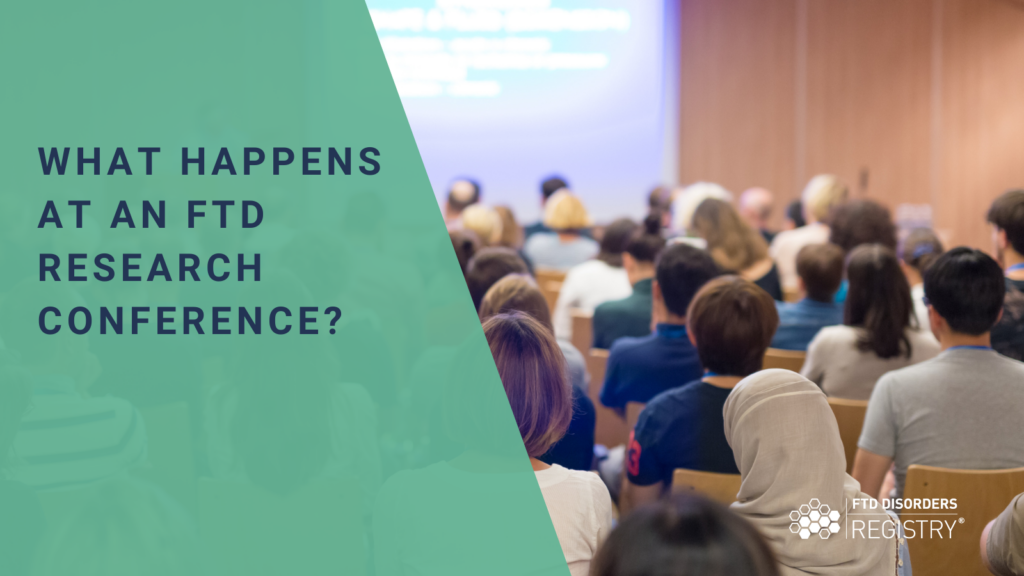
What Happens at an FTD Research Conference?
What happens when the FTD research community comes together? See how conferences help researchers share findings, build collaborations, and keep the experiences of people impacted by FTD at the center of research.
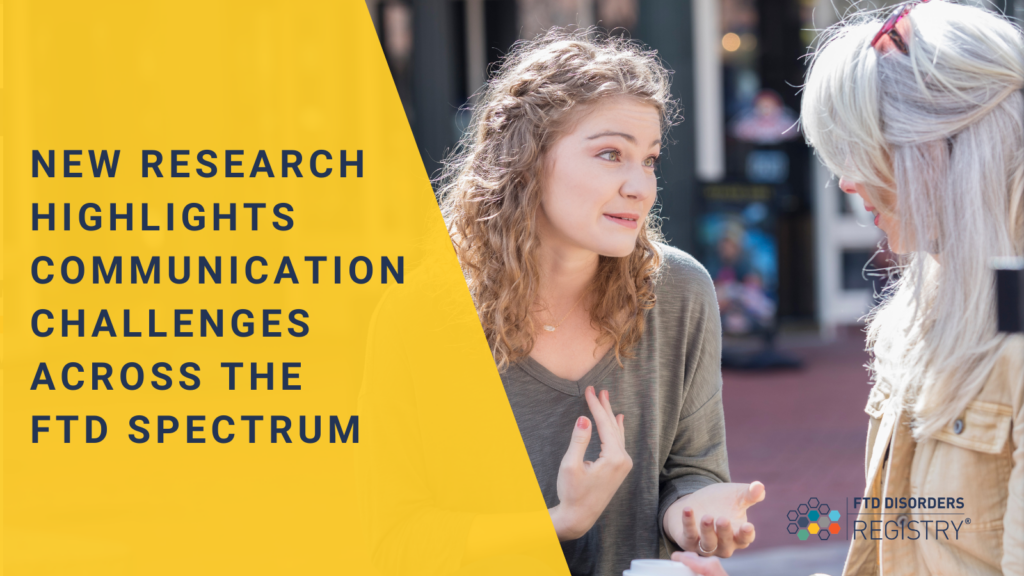
New Research Highlights Communication Challenges Across the FTD Spectrum
A new study published in the American Journal of Speech-Language Pathology uses data from the AFTD Insights Survey to examine communication difficulties across the frontotemporal lobar degeneration (FTLD) spectrum.
Quick Question September 2026 Result:
Behavioral changes are a common and often challenging aspect of frontotemporal degeneration (FTD), affecting both individuals diagnosed and those who care for them. These changes can take many forms, from shifts in personality and …
What Happens at an FTD Research Conference?
What happens when the FTD research community comes together? See how conferences help researchers share findings, build collaborations, and keep the experiences of people impacted by FTD at the center of research.
What Does FTD Research Need to Move Forward?
FTD research depends on participants, families, clinicians, researchers, data, and collaboration working together. Each plays a different role in helping move research forward.
WAYS TO HELP
JOIN US TODAY
Be part of the community working to end FTD. Every voice counts.
PARTICIPATE IN RESEARCH
Support the science for an FTD cure. Sign up here.

SPREAD THE WORD
Invite family and friends to join the growing FTD Registry.


THE FTD REGISTRY IS A PARTNERSHIP OF: